
Unit Head Anna Pedrola Biomedical Data Engineers Marina Arias, Benet Fité, Carlota Gozalbo Image Data Engineer Cristina Villaseca Data Steward Clara Vallés
Data Engineering for Research Unit
Working in close collaboration with various VHIO research groups, our Data Engineering for Research Unit focuses on the standardization and digitization of data. In addition to actively participating in several research projects, we are dedicated to creating and maintaining an optimal infrastructure and environment for institutional data storage and management.
We handle a wide variety of data including clinical information, genomics, images, and other types of biomedical data to maximize its utility for research, and provide investigators with the necessary tools. This Unit also offers support in defining Data Management Plans (DMPs), which outline how data will be managed both during and after a research project. Through the development of ETL (Extract, Transform, Load) processes, the creation of structured databases, the integration of data from diverse sources, and the development and management of specialized software, we provide a robust infrastructure to enable researchers to fully leverage the value of generated data.
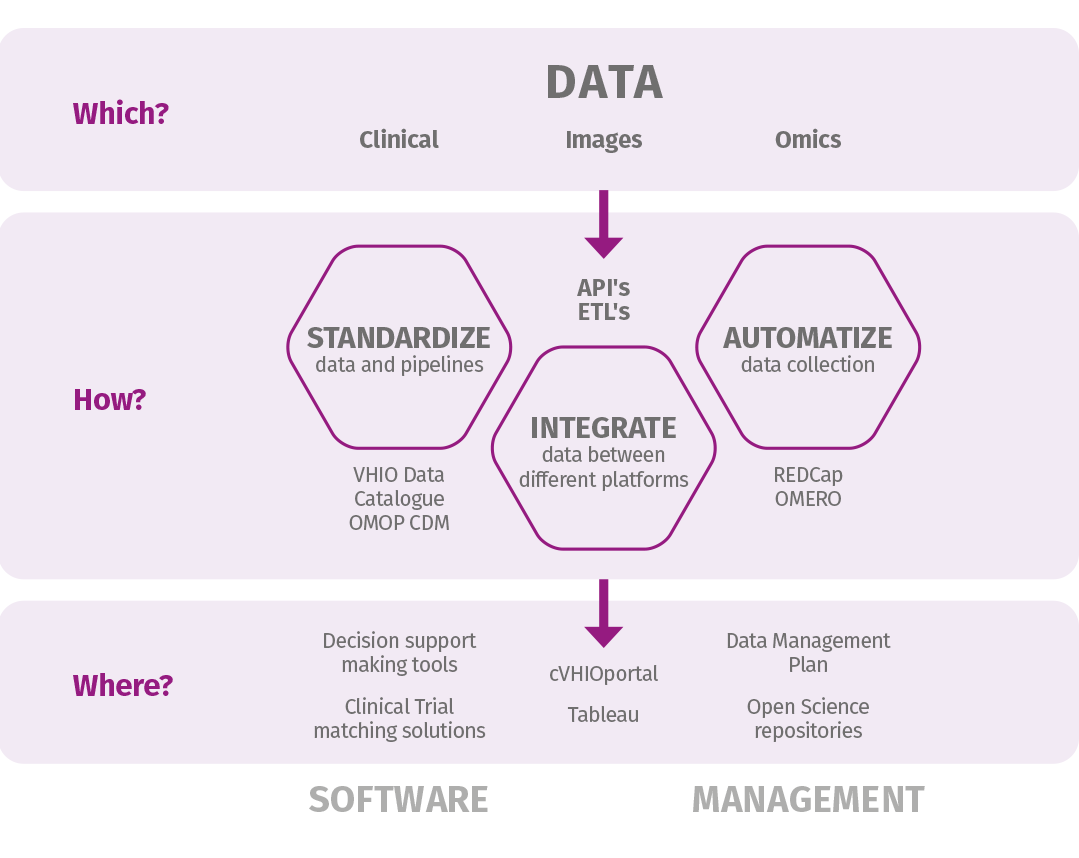
- Standardize clinical data using the OMOP (Observational Medical Outcomes Partnership) data model.
- Advanced visualization of clinical, genomic, and other ‘omics’ data through platforms including the cBioPortal for Cancer Genomics web resource.
- Integrate databases and platforms to ensure efficient and centralized data management.
- Develop customized electronic case report forms (eCRF) in the Research Electronic Data Capture (REDCap) web application for research data capture and management.
- Implement Extract, Transform, Load (ETL) automated processes for data transfer in research and analysis.
- Explore artificial intelligence (AI)-driven approaches for the automated extraction of information from unstructured data.
- Develop customized applications that enhance patient and sample tracking in clinical trials, as well as tailored solutions for research projects.
- We have set up our Unit and established best programming practices.
- Development of an institutional clinical database in OMOP CDM format, with the first project successfully integrated.
- Standardization of data collection formats for initial visit records in REDCap (Research Electronic Data Capture) secure web-based application.
- Deployment of the cBioPortal platform with institutional clinical-genomic data.
- Automation of manual data extraction processes.
- We have developed an institutional template for the Data Management Plan, and custom decision support tools.
- Scale up the centralized OMOP database by standardizing and integrating data from additional projects.
- Consolidate the use of cVHIOportal, expanding data integration and project adoption.
- Strengthen collaboration with colleagues at the Vall d’Hebron University Hospital to enhance data extraction processes.
- Develop a Clinical Trial Engine to enhance automated patient enrollment in clinical trials.
- Implement an institutional biomedical imaging management tool that seamlessly integrates with existing data sources.
- Create a Data Catalog to identify and address potential institutional data needs.
- Develop an AI-powered tool help curate and structure unstructured data.
- Mirallas O, Martin-Cullell B, Navarro V, Vega KS, Recuero-Borau J, Gómez-Puerto D, López-Valbuena D, Salva de Torres C, Andurell L, Pedrola A, Berché R, Palmas F, Ucha JM, Villacampa G, Rezqallah A, Sanz-Beltran J, Bach R, Bueno S, Viaplana C, Molina G, Hernando-Calvo A, Aguilar-Company J, Roca M, Muñoz-Couselo E, Martínez-Martí A, Alonso A, Eremiev S, Macarulla T, Oaknin A, Saura C, Élez E, Felip E, Peñuelas Á, Burgos R, Pardo PG, Garralda E, Tabernero J, Serradell S, Servitja S, Paez D, Dienstmann R, Carles J. Development of a prognostic model to predict 90-day mortality in hospitalised cancer patients (PROMISE tool): a prospective observational study. Lancet Reg Health Eur. 2024 Oct 9;46:101063.
- SYNTHIA: Synthetic Data Generation Framework for Integrated Validation of Use Cases and AI Healthcare Applications. Funded by the European Commission. 01/09/2024-31/08/2029. PI: Rodrigo Dienstmann.
- Cancer Core Europe (CCE). Founded in 2014, this consortium comprises seven leading European comprehensive cancer centers, including VHIO, to accelerate the development of innovative cancer therapies through close collaboration in translational and clinical research.
- The EU-funded CCE Building Data Rich Clinical Trials (CCE_DART) is an innovative project dedicated to deliver novel methods for the design and implementation of newer, more efficient and effective clinical trials in oncology.
- Historia clínica Inteligente: Transformando Notas Clínicas en Datos Estructurado.
- EU-funded AI4Lungs project: AI-Based Personalised Care for Respiratory Disease using Multi-Modal Data in Patient Stratification.
- EU-funded EUCANCan project: a federated network of aligned and interoperable infrastructures for the homogeneous analysis, management and sharing of genomic oncology data for Personalized Medicine.
- UpSMART Accelerator Management Team – SMART Experimental Cancer Medicine Trials eNABLED.
- American Association for Cancer Research (AACR) Project GENIE® (Genomics Evidence Neoplasia Information Exchange).

Head of Unit Lara Nonell Bioinformaticians Irene Agustí Barea, Ángel García de la Torre García, Alba Mas Malavila, Pau Marc Muñoz Torres
Bioinformatics Unit
VHIO’s Bioinformatics Unit (VHIOinformatics) provides research groups with cutting-edge computational resources for the analysis of cancer-related omics data. We support VHIO investigators through the implementation of state-of-the-art bioinformatic pipelines and the processing of multi-omics datasets.
Collaborating with researchers across multiple projects, we participate in different stages of research from conception or experimental design through to bioinformatic data analysis and final publication, with particular focus on visualization and functional interpretation. In 2024 we conducted forty-eight omics data analyses in collaboration with nineteen VHIO research groups. These are mainly RNA-seq and genomics (targeted or WES) data sets but also the reassessment of several publicly available datasets to gain insights into the development and spread of cancer. Following the FAIR Guiding Principles for scientific data management, we have also uploaded some of our internal datasets to publicly accessible repositories.
Our computational procedures are based on open-source software developed in a secure and reproducible environment. Available to bioinformaticians in-house, and developed in collaboration with our IT department, we have continued to expand our cluster infrastructure, with the addition of a GPU partition for artificial intelligence (AI) analyses. Thanks to the Excelencia Severo Ochoa accreditation that VHIO received in 2021 as a Severo Ochoa Center of Excellence (2022-2026), and the support we receive from CRIS contra el cáncer-the CRIS Cancer Foundation, which officially joined VHIO’s Board of Trustees this year, we will continue to develop this infrastructure in 2025.
Our Bioinformatics Unit is a member of the Spanish translational bioinformatics network, TransBioNet, which is coordinated by the Spanish National Bioinformatics Institute (INB) and works in association with the European Life Science Infrastructure for Biological Information (ELIXIR). We also represent VHIO in various consortia and taskforces.
- Manage and expand an appropriate and scalable computational infrastructure for bioinformatics analyses, including artificial intelligence (AI) data analyses.
- The implementation of state-of-the-art pipelines and tools for the analysis and visualization of different omics datasets, including publicly available datasets.
- Application of advanced bioinformatics techniques for the identification and validation of biomarkers for cancer research.
- Generation of computational models to integrate different types of omics data that foster personalized medicine using classical or cutting-edge machine learning techniques.
- Establish collaborative research with VHIO groups to promote the use of advanced computational methods for data analysis, visualization, and interpretation.
- Consolidate a group of skilled bioinformaticians who can support problem-solving in many omics data analysis scenarios.
- Coordinate an internal bioinformatics network aimed at sharing knowledge and optimizing resources. As an example, we organize a monthly Bioinformatics Journal Club to discuss hot topics in the field.
- Provide mentorship to bioinformaticians in-house on the use of VHIO’s computational cluster and the application of standard data analysis procedures. This also includes personalized mentoring to junior bioinformaticians hired by the different groups.
- The management of VHIO’s computational cluster which operates with Slurm and Docker for task management. In addition, Nextflow facilitates the automation of bioinformatic pipelines. GPUs have been included in the infrastructure to perform AI analyses.
- Recruitment and training of expert bioinformaticians to support VHIO’s pioneering cancer research.
- Establishment of standard pipelines for the processing and analysis of omics datasets.
- Collaboration with several groups for the analysis of omics data sets, ranging from raw sequencing data alignment to the development of functions for the appropriate visualization of assessment results. During 2024 we collaborated in the data analysis of forty-eight translational projects of nineteen research groups at VHIO.
- Our group provides guidance to VHIO researchers on omics data analyses.
- We participate in various consortia, task forces and institutional projects. These include VHIO’s task forces focused on colon and breast cancers, as well as our internal and multidisciplinary data management group. This group oversees the development and implementation of data lifecycle management policies at VHIO.
- Organization of the first edition of VHIO’s annual Computational Oncology Master’s Thesis Award to recognize the best master’s thesis on Computational Life Sciences at the national level (Spain). Launched in February this year, this award was organized together with VHIO’s Cancer Computational Biology, Cancer Immunogenomics, and Radiomics Groups, in collaboration with the VHIO Academy. We are preparing this year’s edition.
- Support the continuity of the Severo Ochoa Digital Oncology Unit (SOUND), together with other research groups and support units.
- Manage the bioinformaticians network at VHIO and define a standard procedure to compute omics data analysis on the computational cluster.
- Organize new internal courses on standard bioinformatic tasks such as functional enrichment analysis or extraction and visualization of public cancer repositories.
- Provide bioinformatics support and guidance to VHIO’s research groups to help resolve any challenges raised during internal meetings or by our task forces (e.g. sequencing-based liquid biopsy analysis).
- Assist VHIO's research groups in their data management practices and foster a collaborative journey toward open data sharing. In this context, one of the objectives of the cross-functional Data Management Group that we are part of, is to develop a protocol for data sharing through the process of publishing research papers.
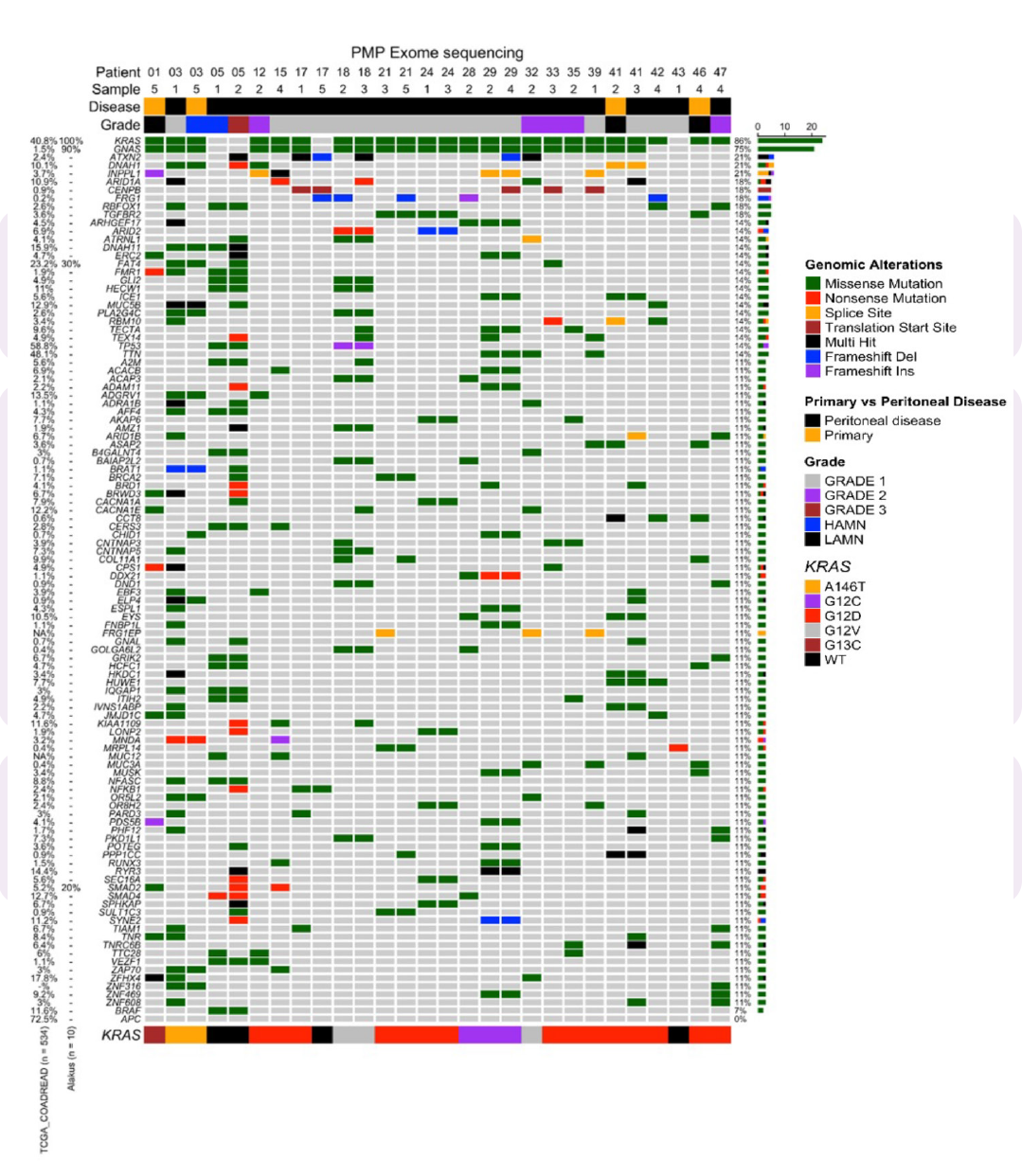
- Martínez-Quintanilla J, Cabot D, Sabia D, Arqués O; PMPnet Group; Vergés J, Chicote I, Bijelic L; PMPnet Group; Cabellos L, Alcántara AM, Ramos I, Barrios P, Crusellas O, Palacio LM; PMPnet Group; Cámara JA, Barriuso J; PMPnet Group; Jiménez JJ, Muñoz-Torres P, Nonell L, Flores R, Médico E, Guaglio M; PMPnet Group; Ros J, Élez E, Tabernero J, Aziz O, Deraco M, Palmer HG; PMPnet Group; PMPnet Group. Precision Oncology and Systemic Targeted Therapy in Pseudomyxoma Peritonei. Clin Cancer Res. 2024 Sep 13;30(18):4082-4099.
- Casanova-Salas I, Aguilar D, Cordoba-Terreros S, Agundez L, Brandariz J, Herranz N, Mas A, Gonzalez M, Morales-Barrera R, Sierra A, Soriano-Navarro M, Cresta P, Mir G, Simonetti S, Rodrigues G, Arce-Gallego S, Delgado-Serrano L, Agustí I, Castellano-Sanz E, Mast R, de Albert M, Celma A, Santamaria A, Gonzalez L, Castro N, Suanes MDM, Hernández-Losa J, Nonell L, Peinado H, Carles J, Mateo J. Circulating tumor extracellular vesicles to monitor metastatic prostate cancer genomics and transcriptomic evolution. Cancer Cell. 2024 Jul 8;42(7):1301-1312.e7.

Unit Head Rodrigo Dienstmann Data Manager and Project Coordinator Cristina Viaplana Data Analysts Gloria Castillo, Raquel Comas, Pablo Cresta, Eduardo García, Laura González, Laia Joval, Sandra Martinez, Armando Mel, Fiorella Ruiz, Christina Zatse
Oncology Data Science (ODysSey) Group
The ODysSey Group at VHIO promotes biomedical research by integrating cancer multi-omics data with clinical outcomes from oncology patients treated at the Vall d’Hebron University Hospital (HUVH). As experts in disease ontology and cancer semantics, we extract and process clinical data elements from electronic medical records. By using common data models, we standardize the format and content of observational healthcare data, harmonizing disparate coding systems with minimal information loss.
Our group designs and maintains comprehensive clinical-molecular repositories and custom data management solutions that empower researchers to conduct correlative analyses for hypothesis generation and biomarker validation, from genomics to computational pathology and radiology. Our team also assists investigators in identifying eligible patients for translational studies, clinical data collection through electronic case report forms, data processing and quality assessment. Working side by side with VHIO’s Biostatistics Unit, we collaborate in the design, analysis and interpretation of study results. Together with the Data Engineering for Research Unit, we deploy informatics tools to explore and visualize multi-omics data for research purposes and maintain web applications in the field of precision oncology care and clinical trial matching.
We actively participate in international real-world data analyses projects, foster collaborative research in computational oncology, and bridge connections among cancer researchers working on predictive and prognostic modeling, cancer driver identification, molecular subtyping, and tumor actionability.
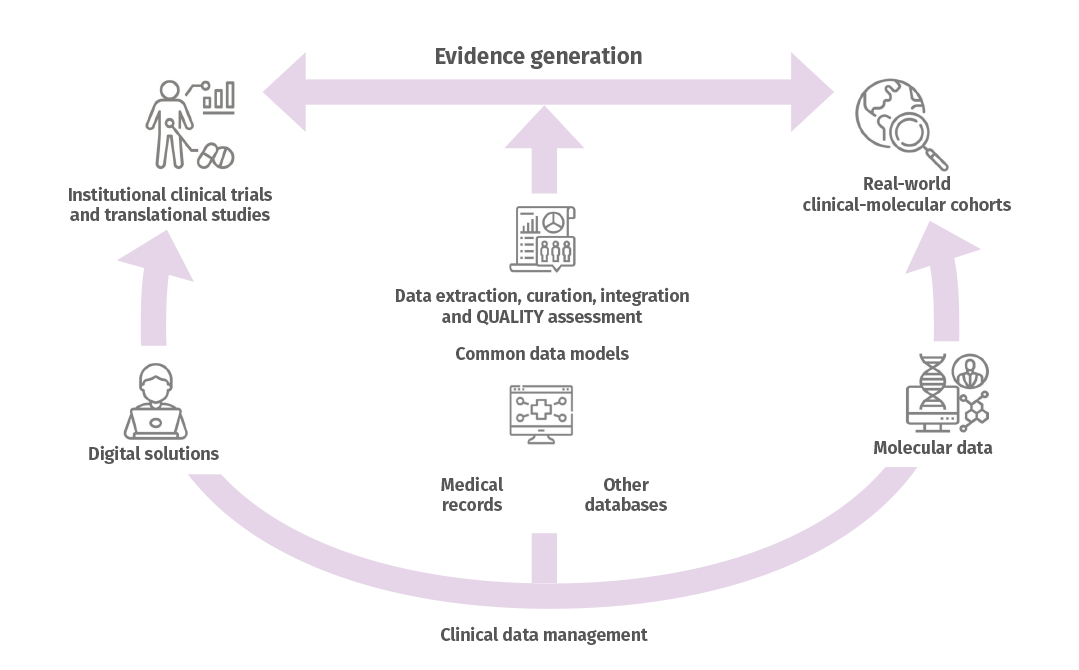
Facilitate high-quality clinical-molecular correlative studies and investigator-initiated trials (IITs) at VHIO:
- Develop and maintain clinical-molecular databases, data management solutions, and decision-support systems as resources for clinicians, molecular pathologists, radiologists and translational researchers.
- Provide guidance to medical oncologists and cancer biologists during the design and interpretation of clinical trials and biomarker correlative studies, as well as the development and validation of omics-based tests that have a direct clinical application.
- We act as a key partner in the development of ad-hoc, customized electronic research data capture solutions tailored to the specific requirements of each study protocol. Additionally, we adopt standardized ontologies to accurately code specific terminology related to medical events.
- Promote reproducibility of research findings across different institutions by using open-source data processing and analytical tools.
- Facilitate efficient study design and execution of analyses on patient-level observational data.
Promote evidence-based precision cancer care and clinical trial recruitment:
- Advocate for the clinical adoption of the Molecular Tumor Board Portal (MTBP, https://mtbp.org) and Cancer Genome Interpreter (CGI, https://www.cancergenomeinterpreter.org) as decision support systems for the correct interpretation of genomic data and selection of the most appropriate targeted treatment. These portals leverage a variety of state-of-the-art tools to interpret the biological and clinical significance of tumor and germline alterations.
- Integrate the OncoTrialsTrack platform (https://oncotrialstrack.vhio.net) with genomic reports that empower healthcare providers in the difficult and time-consuming task of finding the most suitable clinical trial for cancer patients based on molecular data.
- Strengthen interactions among computational oncology scientists and preclinical-clinical researchers to promote the adoption of artificial intelligence solutions.
- Foster digital oncology with the development of technological solutions to monitor, process and integrate different data at the individual and population levels to help address issues in health systems and the challenges faced by patients and clinicians.
- We have provided support to VHIO investigators in biomarker discovery and validation. This has resulted in several impactful publications within our field as well as oral presentations at some of the most prestigious oncology conferences.
- As the number of investigator-initiated studies increases at VHIO, we have become an essential data management partner, providing professional assistance in electronic data capture and expert medical advice in multiple clinical trials.
- Widespread adoption of Observational Medical Outcomes Partnership (OMOP) Common Data Model (CDM) to enable high quality and high relevance real-world outcomes and translational research
- We have successfully delivered integrated analyses of multi-omics, from multi-centric real-world data cohorts in different molecular stratification projects sponsored by the European Commission, including COLOSSUS in colorectal cancer, and LEGACy in gastric cancer.
- Our group is an active member of AACR’s Genomics Evidence Neoplasia Information Exchange (GENIE) project, and other international data sharing initiatives such as EUCANCan, that catalyze precision oncology through the development of regulatory-grade registries aggregating and linking cancer genomics data with clinical outcomes from tens of thousands of cancer patients treated at the participating institutions.
- We have conducted several educational activities in the field of precision medicine field including Molecular Tumour Board meetings and specialized workshops to train investigators on how to explore public web resources with clinical-genomics data.
- Programmatic clinical data collection and integration of artificial intelligence (language models) in the curation and qualification process.
- Leadership in projects with federated learning, distributed network analysis, and synthetic data generation, allowing researchers to collaborate while safeguarding patient privacy and trust in data science.
- Expand the partnership with the Clinical Research Support Unit (CRSU) at VHIO in the design and implementation of investigator-initiated clinical trials and registries, giving support in electronic data capture and statistical analyses.
- Collaborate closely with our Research Unit for Molecular Therapy of Cancer (UITM) – CaixaResearch, Cancer Genomics, Molecular Oncology and Radiomics Groups to accelerate research and the implementation of cutting-edge data science models and technology platforms in the healthcare domain for the personalization of patient care at VHIO.
- Cross-training and education in computational oncology, and the development of web-mobile applications for investigators, care providers and patients.
- Mirallas O, Martin-Cullell B, Navarro V, Vega KS, Recuero-Borau J, Gómez-Puerto D, López-Valbuena D, Salva de Torres C, Andurell L, Pedrola A, Berché R, Palmas F, Ucha JM, Villacampa G, Rezqallah A, Sanz-Beltran J, Bach R, Bueno S, Viaplana C, Molina G, Hernando-Calvo A, Aguilar-Company J, Roca M, Muñoz-Couselo E, Martínez-Martí A, Alonso A, Eremiev S, Macarulla T, Oaknin A, Saura C, Élez E, Felip E, Peñuelas Á, Burgos R, Pardo PG, Garralda E, Tabernero J, Serradell S, Servitja S, Paez D, Dienstmann R, Carles J. Development of a prognostic model to predict 90-day mortality in hospitalised cancer patients (PROMISE tool): a prospective observational study. Lancet Reg Health Eur. 2024 Oct 9;46:101063.
- Villacampa G, Cresta Morgado P, Carità L, Navarro V, Pascual T, Dienstmann R. Safety and efficacy of antibody-drug conjugates plus immunotherapy in solid tumours: A systematic review and meta-analysis. Cancer Treat Rev. 2024 Dec;131:102847.
- SYNTHIA: Synthetic Data Generation Framework For Integrated Validation Of Use Cases And AI Healthcare Applications.
- EOSC4C: A European-wide foundation to accelerate Data-driven Cancer Research.
- ROSALIND: Analysing and solving exceptional long-term survival in patients with poor prognosis solid tumors.
- American Association for Cancer Research’s (AACR) Genomics Evidence Neoplasia Information Exchange (GENIE) project.
- CGI-Clinics: Cancer Genomics Interpreter, a community-driven project that aims to improve precision medicine in oncology by optimizing genomic data interpretation.
- PORTRAIT-TNBC: integrative multi-omics platform to identify predictive biomarkers of response to chemotherapy plus immunotherapy in early-stage triple negative breast cancer.
- PragmaTIL: Pragmatic approach to Adoptive Cell Therapy (ACT) using Tumor Infiltrating Lymphocytes (TIL) in selected solid tumors.
- UpSMART Accelerator Management Team - SMART Experimental Cancer Medicine Trials eNABLED.
- Cancer Core Europe (CCE) DART: Building Data Rich Clinical Trials.
- Cancer Core Europe (CCE) Consortium’s Basket of Baskets (BoB) clinical trial.
- Ligero M, Serna G, El Nahhas OSM, Sansano I, Mauchanski S, Viaplana C, Calderaro J, Toledo RA, Dienstmann R, Vanguri RS, Sauter JL, Sanchez-Vega F, Shah SP, Ramón Y Cajal S, Garralda E, Nuciforo P, Perez-Lopez R, Kather JN. Weakly Supervised Deep Learning Predicts Immunotherapy Response in Solid Tumors Based on PD-L1 Expression. Cancer Res Commun. 2024 Jan 11;4(1):92-102.
- Fontes MS, de Almeida DVP, Cárcano F, Lages P, Dienstmann R. Precision medicine for urothelial carcinoma: An international perspective. Urol Oncol. 2024 Dec;42(12):402-410.
- Prior O, Macarro C, Navarro V, Monreal C, Ligero M, Garcia-Ruiz A, Serna G, Simonetti S, Braña I, Vieito M, Escobar M, Capdevila J, Byrne AT, Dienstmann R, Toledo R, Nuciforo P, Garralda E, Grussu F, Bernatowicz K, Perez-Lopez R. Identification of Precise 3D CT Radiomics for Habitat Computation by Machine Learning in Cancer. Radiol Artif Intell. 2024 Mar;6(2):e230118.
- Ligero M, Gielen B, Navarro V, Cresta Morgado P, Prior O, Dienstmann R, Nuciforo P, Trebeschi S, Beets-Tan R, Sala E, Garralda E, Perez-Lopez R. A whirl of radiomics-based biomarkers in cancer immunotherapy, why is large scale validation still lacking? NPJ Precis Oncol. 2024 Feb 21;8(1):42.
- Sunagua Aruquipa M, D'Alpino Peixoto R, Jacome A, Cesar F, Lorandi V, Dienstmann R. Association of KRAS G12C Status with Age at Onset of Metastatic Colorectal Cancer. Curr Issues Mol Biol. 2024 Feb 4;46(2):1374-1382.
- Serra-Bardenys G, Blanco E, Escudero-Iriarte C, Serra-Camprubí Q, Querol J, Pascual-Reguant L, Morancho B, Escorihuela M, Tissera NS, Sabé A, Martín L, Segura-Bayona S, Verde G, Aiese Cigliano R, Millanes-Romero A, Jerónimo C, Cebrià-Costa JP, Nuciforo P, Simonetti S, Viaplana C, Dienstmann R, Oliveira M, Peg V, Stracker TH, Arribas J, Canals F, Villanueva J, Di Croce L, García de Herreros A, Tian TV, Peiró S. LOXL2-mediated chromatin compaction is required to maintain the oncogenic properties of triple-negative breast cancer cells. FEBS J. 2024 Jun;291(11):2423-2448.
- Knapen DG, Hone Lopez S, de Groot DJA, de Haan JJ, de Vries EGE, Dienstmann R, de Jong S, Bhattacharya A, Fehrmann RSN. Independent transcriptional patterns reveal biological processes associated with disease-free survival in early colorectal cancer. Commun Med (Lond). 2024 May 3;4(1):79.
- Vera R, Castro N, Labiano I, Lecumberri A, Huerta AE, Arasanz H, Caseda I, Ruiz-Pace F, Viaplana C, Arrazubi V, Hernandez-Garcia I, Mata E, Gomez D, Laguna S, Suarez J, Fernandez-De-Los-Reyes I, Rullan M, Estremera F, Alonso V, Pazo-Cid R, Gil-Negrete A, Lafuente A, Martin-Carnicero A, Dienstmann R, Alsina M. The TEOGIC study project: a comprehensive characterization of early onset gastrointestinal cancer in the Northern area of Spain. BMC Cancer. 2024 Jun 1;24(1):668.
- Mosele MF, Westphalen CB, Stenzinger A, Barlesi F, Bayle A, Bièche I, Bonastre J, Castro E, Dienstmann R, Krämer A, Czarnecka AM, Meric-Bernstam F, Michiels S, Miller R, Normanno N, Reis-Filho J, Remon J, Robson M, Rouleau E, Scarpa A, Serrano C, Mateo J, André F. Recommendations for the use of next-generation sequencing (NGS) for patients with advanced cancer in 2024: a report from the ESMO Precision Medicine Working Group. Ann Oncol. 2024 Jul;35(7):588-606.
- Reinert T, do Rego FO, Silva MCE, Rodrigues AM, Koyama FC, Gonçalves AC, Pauletto MM, de Carvalho Oliveira LJ, de Resende CAA, Landeiro LCG, Barrios CH, Mano MS, Dienstmann R. The somatic mutation profile of estrogen receptor-positive HER2-negative metastatic breast cancer in Brazilian patients. Front Oncol. 2024 Jun 17;14:1372947.
- Segal NH, Tie J, Kopetz S, Ducreux M, Chen E, Dienstmann R, Hollebecque A, Reilley MJ, Elez E, Cosaert J, Cain J, Soo-Hoo Y, Hewson N, Cooper ZA, Kumar R, Tabernero J. COLUMBIA-1: a randomised study of durvalumab plus oleclumab in combination with chemotherapy and bevacizumab in metastatic microsatellite-stable colorectal cancer. Br J Cancer. 2024 Oct;131(6):1005-1013.
- van de Haar J, Roepman P, Andre F, Balmaña J, Castro E, Chakravarty D, Curigliano G, Czarnecka AM, Dienstmann R, Horak P, Italiano A, Marchiò C, Monkhorst K, Pritchard CC, Reardon B, Russnes HEG, Sirohi B, Sosinsky A, Spanic T, Turnbull C, Van Allen E, Westphalen CB, Tamborero D, Mateo J. ESMO Recommendations on clinical reporting of genomic test results for solid cancers. Ann Oncol. 2024 Nov;35(11):954-967.
- Herencia-Ropero A, Llop-Guevara A, Staniszewska AD, Domènech-Vivó J, García-Galea E, Moles-Fernández A, Pedretti F, Domènech H, Rodríguez O, Guzmán M, Arenas EJ, Verdaguer H, Calero-Nieto FJ, Talbot S, Tobalina L, Leo E, Lau A, Nuciforo P, Dienstmann R, Macarulla T, Arribas J, Díez O, Gutiérrez-Enríquez S, Forment JV, O'Connor MJ, Albertella M, Balmaña J, Serra V. The PARP1 selective inhibitor saruparib (AZD5305) elicits potent and durable antitumor activity in patient-derived BRCA1/2-associated cancer models. Genome Med. 2024 Aug 26;16(1):107.
- Bartels M, Chibaudel B, Dienstmann R, Lehtiö J, Piccolo A, Michielin O, O'Kane G, Pruneri G. Evolving and Improving the Sustainability of Molecular Tumor Boards: The Value and Challenges. Cancers (Basel). 2024 Aug 20;16(16):2888.
- Villacampa G, Cresta Morgado P, Carità L, Navarro V, Pascual T, Dienstmann R. Safety and efficacy of antibody-drug conjugates plus immunotherapy in solid tumours: A systematic review and meta-analysis. Cancer Treat Rev. 2024 Dec;131:102847.
- Mirallas O, Martin-Cullell B, Navarro V, Vega KS, Recuero-Borau J, Gómez-Puerto D, López-Valbuena D, Salva de Torres C, Andurell L, Pedrola A, Berché R, Palmas F, Ucha JM, Villacampa G, Rezqallah A, Sanz-Beltran J, Bach R, Bueno S, Viaplana C, Molina G, Hernando-Calvo A, Aguilar-Company J, Roca M, Muñoz-Couselo E, Martínez-Martí A, Alonso A, Eremiev S, Macarulla T, Oaknin A, Saura C, Élez E, Felip E, Peñuelas Á, Burgos R, Pardo PG, Garralda E, Tabernero J, Serradell S, Servitja S, Paez D, Dienstmann R, Carles J. Development of a prognostic model to predict 90-day mortality in hospitalised cancer patients (PROMISE tool): a prospective observational study. Lancet Reg Health Eur. 2024 Oct 9;46:101063.
- Dienstmann R, da Silva LM, Orpinelli Ramos do Rego F, Muniz Rodrigues A, Koyama FC, Galindo LT, de Bustamante Fernandes C, de Souza BB, Paes RD, Montella T, de Marchi P, Jeha Araújo B, Ferrari BL, Mathias C, Pereira E, Zalis MG, Leslin C, Ferreira CG. Real-World Study on Implementation of Genomic Tests for Advanced Lung Adenocarcinoma in Brazil. JCO Glob Oncol. 2024 Nov;10:e2400354.
- Oliveira LJC, Rodrigues AM, Fernandes CB, Ramos do Rego FO, Koyama FC, Souto AKBA, Santana TA, Gonzaga de Faria JP, Lima Bulcão M, Nascimento ILO, Silva ACBN, Gonçalves IPE, Maia RE, de Azevedo RGMV, Galindo LT, Pachito DV, Cury A, Zalis MG, Ferrari BL, Garicochea B, Dienstmann R. A portrait of germline pathogenic variants in high and moderate penetrance breast cancer genes in Brazil. Front Oncol. 2024 Dec 17;14:1495605.
- Tarantino P, Tayob N, Villacampa G, Dang C, Yardley DA, Isakoff SJ, Valero V, Faggen M, Mulvey T, Bose R, Weckstein D, Wolff AC, Reeder-Hayes K, Rugo HS, Ramaswamy B, Zuckerman D, Hart L, Gadi VK, Constantine M, Cheng K, Garrett AM, Marcom PK, Albain K, DeFusco P, Tung N, Ardman B, Nanda R, Jankowitz RC, Rimawi M, Abramson V, Pohlmann PR, Van Poznak C, Forero-Torres A, Liu MC, Ruddy KJ, Waks AG, DeMeo M, Burstein HJ, Partridge AH, Dell'Orto P, Russo L, Krause E, Newhouse DJ, Kurt BB, Mittendorf EA, Schneider B, Prat A, Winer EP, Krop IE, Tolaney SM; Consortium of the TBCRC Translational Investigators; TBCRC Translational Investigators. Adjuvant Trastuzumab Emtansine Versus Paclitaxel Plus Trastuzumab for Stage I Human Epidermal Growth Factor Receptor 2-Positive Breast Cancer: 5-Year Results and Correlative Analyses From ATEMPT. J Clin Oncol. 2024 Nov;42(31):3652-3665.
- Conte B, Brasó-Maristany F, Hernández AR, Pascual T, Villacampa G, Schettini F, Vidal Losada MJ, Seguí E, Angelats L, Garcia-Fructuoso I, Gómez-Bravo R, Lorman-Carbó N, Paré L, Marín-Aguilera M, Martínez-Sáez O, Adamo B, Sanfeliu E, Fratini B, Falato C, Chic N, Vivancos A, Villagrasa P, Staaf J, Parker JS, Perou CM, Prat A. A 14-gene B-cell immune signature in early-stage triple-negative breast cancer (TNBC): a pooled analysis of seven studies. EBioMedicine. 2024 Apr;102:105043.
- Serrano C, Rothschild S, Villacampa G, Heinrich MC, George S, Blay JY, Sicklick JK, Schwartz GK, Rastogi S, Jones RL, Rutkowski P, Somaiah N, Navarro V, Evans D, Trent JC. Novel trial designs for patients with gastrointestinal stromal tumor. ESMO Open. 2024 Jan;9(1):102218.
- Villacampa G, Papakonstantinou A, Fredriksson I, Matikas A. Impact of Primary Breast Surgery on Overall Survival of Patients With De Novo Metastatic Breast Cancer: A Systematic Review and Meta-Analysis. Oncologist. 2024 Jan 5;29(1):1-7.
- Montoro MJ, Palomo L, Haferlach C, Acha P, Chan O, Navarro V, Kubota Y, Schulz FI, Meggendorfer M, Briski R, Al Ali N, Xicoy B, López-Cadenas F, Bosch F, González T, Eder LN, Jerez A, Wang YH, Campagna A, Santini V, Bernal Del Castillo T, Such E, Tien HF, Diaz Varela N, Platzbecker U, Haase D, Díez-Campelo M, Della Porta M, Garcia-Manero G, Wiseman DH, Germing U, Maciejewski JP, Komrokji RS, Sole F, Haferlach T, Valcárcel D. Influence of TP53 gene mutations and their allelic status in myelodysplastic syndromes with isolated 5q deletion. Blood. 2024 Oct 17;144(16):1722-1731.
- Iacoboni G, Sánchez-Salinas MA, Rejeski K, Martín-López AÁ, Kwon M, Navarro V, Jalowiec KA, Hernani R, Reguera-Ortega JL, Gallur L, Blumenberg V, Herrero-García M, Roddie C, Benzaquén A, Delgado-Serrano J, Bailén R, Carpio C, Amat P, López-Corral L, Martín-Martín L, Bastos M, Subklewe M, O'Reilly M, Barba P. Efficacy and safety of bendamustine-containing bridging therapy in R/R LBCL patients receiving CD19 CAR T-cells. Hemasphere. 2024 Jun 26;8(7):e86.
- Post-transplant cyclophosphamide compared to sirolimus/tacrolimus in reduced intensity conditioning transplants for patients with lymphoid malignancies. Fox ML, García-Cadenas I, Navarro V, Martínez AP, Kara M, Bazán IS, Ferra Coll C, Bailén R, Bento L, Parody R, Esquirol A, Ortí G, Mussetti A, Salamero O, Martino R, González AP, Barba P, Kwon M, Solano C, Bosch F, Valcárcel D; Spanish Hematopoietic Stem Cell Transplantation and Cell Therapy Group (GETH-TC). Bone Marrow Transplant. 2024 Oct;59(10):1369-1375.
- Iacoboni G, Iraola-Truchuelo J, O'Reilly M, Navarro V, Menne T, Kwon M, Martín-López AÁ, Chaganti S, Delgado J, Roddie C, Pérez A, Norman J, Guerreiro M, Gibb A, Caballero AC, Besley C, Martínez-Cibrián N, Mussetti A, Sanderson R, Luzardo H, Iyengar S, Sánchez JM, Jones C, Sancho JM, Barba P, Latif AL, López-Corral L, Hernani R, Reguera JL, Sureda A, Garcia-Sancho AM, Bastos M, Abrisqueta P, Kuhnl A. Treatment outcomes in patients with large B-cell lymphoma after progression to chimeric antigen receptor T-cell therapy. Hemasphere. 2024 May 21;8(5):e62.
- Sánchez-Salinas MA, Miarons M, Troconiz IF, Navarro V, Varela J, Iacoboni G, Barba P. Is estimated exposure an accurate surrogate for measured fludarabine levels in patients with CAR T-cell therapy? Blood Adv. 2024 May 14;8(9):2130-2132.
- Iacoboni G, Navarro V, Martín-López AÁ, Rejeski K, Kwon M, Jalowiec KA, Amat P, Reguera-Ortega JL, Gallur L, Blumenberg V, Gutiérrez-Herrero S, Roddie C, Benzaquén A, Delgado-Serrano J, Sánchez-Salinas MA, Bailén R, Carpio C, López-Corral L, Hernani R, Bastos M, O'Reilly M, Martín-Martín L, Subklewe M, Barba P. Recent Bendamustine Treatment Before Apheresis Has a Negative Impact on Outcomes in Patients With Large B-Cell Lymphoma Receiving Chimeric Antigen Receptor T-Cell Therapy. J Clin Oncol. 2024 Jan 10;42(2):205-217.
- Phase II Study of Avelumab plus chemotherapy in the peri-operative treatment for patients with resectable Gastric cancer (GC) or Gastroesophageal Junction cancer (GEJC).
- Phase II Study of Durvalumab (MEDI4736) Plus Total Neoadjuvant Therapy (TNT) in Locally Advanced Rectal Cancer (The DUREC Trial).
- A Phase I study to assess the safety and tolerability of ex vivo next-generation neoantigen-selected Tumor-infiltrating Lymphocytes (TILs) therapy in advanced epithelial tumors and immune checkpoint blockade (ICB) resistant solid tumors.
- Olaparib and durvalumab (MEDI4736) in patients with metastatic pancreatic cancer and DNA Damage Repair genes alterations.
- Phase I/Ib trial of OST-499 in cancer patients with advanced solid tumors.
- A phase Ib study with a safety lead-in cohort and expansion phase, of the safety, tolerability, biological effect, and efficacy of allogenic natural killer cells in combination with trastuzumab and pertuzumab in adult patients with refractory metastatic Her2 positive breast cancer.
- A Modular Multi-Basket Trial to Improve Personalized Medicine in Cancer Patients (Basket of Baskets) (BoB).
- Single cell characterization of persistent cells upon treatment with durvalumab (MEDI4736) with or without tremelimumab in MSS and MSI colorectal and endometrial tumors: the SERPENTINE clinical trial.
- Phase II trial of Pembrolizumab in combination with Doxorubicin in Advanced, Recurrent or Metastatic Endometrial Cancer (TOPIC).
- Phase I-II Study to Assess the Safety, Tolerability and Efficacy of Lurbinectedin and Dostarlimab in Advanced/Recurrent Endometrial Cancer Patients with Disease Progression after Prior Therapy with Platinum-based Chemotherapy.
- Multi-target approach including anti-angiogenic agent to overcome treatment resistance in BRAF mutant metastatic colorectal setting. BRAVE.
- TILs Treatment in Advanced Tumors with Alterations in the SWI/SNF Complex: the TILTS Study.
- Phase I, first-in human, open-label, dose escalation and cohort expansion study for the evaluation of safety, pharmacokinetics, pharmacodynamics, and antitumour activity of LB-208 (HTR1B antagonist) in adult patients with relapsed or refractory solid tumours and lymphoma.
- Non‐Randomized, Open‐Label, Prospective Phase II Trial to Better Characterize the Status of HRD leading to a Benefit from Olaparib in Combination with Bevacizumab in Patients with Advanced FIGO Stage III‐IV High Grade Serous or Endometrioid Ovarian, Fallopian Tube, or Peritoneal Cancer After Standard First‐Line Treatment (STROBE).
- Phase II randomized study evaluating a Pragmatic approach to Adoptive Cell Therapy (ACT) using an IL2 analog (ANV419) vs High dose IL2 after Tumor Infiltrating Lymphocytes (TIL) Therapy in patients with melanoma, NSCLC and cervical cancer.
- A Phase 2 Pilot Study to Evaluate the Safety and the Anti-Tumour Activity of the Myc Inhibitor OMO-103 Administered Intravenously in Patients with Advanced High-Grade Osteosarcoma.
- A Phase I Interventional Open-Label, Non-Randomized Dose-Escalation Trial to Evaluate the Safety, Tolerability, Pharmacokinetics, Pharmacodynamics, Immunogenicity, and Preliminary Anti-Tumor Activity of Autologous p95HER2.CARTECH2Me T Cells in Patients with Selected Advanced Cancers.

Head of Unit Guillermo Villacampa Biostatisticians Lorenzo Carità, Victor Navarro Master's Students Anna Aguilera, Maria Lee
Biostatistics Unit
VHIO’s Biostatistics Unit implements innovative biostatistical methodologies to optimize study design, data analysis and interpretation to enhance clinical and preclinical research. Collaborating with research groups across multiple clinical trials and observational studies, we participate in various stages of research from experimental design through to data analysis and visualization and ultimately publication. Areas of focus include sample size calculation, statistical design of clinical trials, multi-state modelling, survival analyses and competitive risk assessment, and systematic reviews and meta-analyses.
Our Unit facilitates the design and initiation of VHIO investigator-initiated studies as well as new adaptive phase I/II clinical trial designs. We work closely with researchers on the design and publication of results from various VHIO-led clinical studies as well as validating the prognostic value of new tests and cancer biomarkers. In addition, we optimize real-world data to generate new insights beyond the context of clinical trials.
Our team participates in several different European and national projects aimed at developing and implementing novel statistical designs. We also work to enhance dose-escalation study designs to optimize dose selection in oncology drug development. Furthermore, we continue to evaluate the potential of synthetic control arms to compare the effectiveness of single-arm trials.
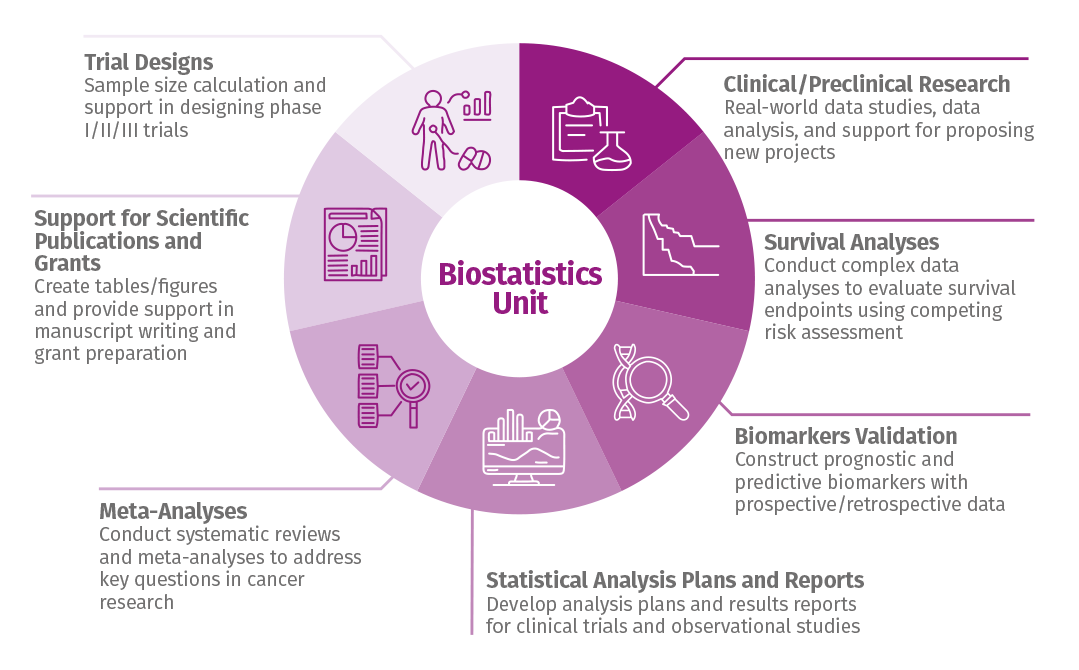
- Phase I, II and III clinical trial design to accelerate efficacy and safety analyses of novel anticancer therapies.
- Implement adaptive clinical trial designs for dose-escalation studies to optimize dose selection in oncology drug development.
- Construct prognostic and predictive models for the validation of new cancer biomarkers.
- Conduct systematic reviews and meta-analyses to respond to important questions in cancer research.
- Perform multi-state modelling and carry out survival analyses and competitive risk assessment.
- Enhance the efficacy of synthetic controls as comparative groups in single-arm trials.
- Establish and manage an optimal infrastructure for automated data processing, statistical analyses and reporting of results from preclinical research projects performed at VHIO.
- Meta-analysis evaluating immunotherapy plus chemotherapy in early breast cancer published in JAMA Oncology.
- Validation of the RAD51 test in the randomized GeparOla trial evaluating early breast cancer.
- We have contributed to expanding the portfolio of VHIO-sponsored clinical trials.
- Support for the development of the TNBC-DX genomic assay in early-stage triple-negative breast cancer (TNBC).
- Evaluation of the safety profile of antibody-drug conjugates (ADCs) in combination with immunotherapy published in Cancer Treatment Reviews.
- Implement model-based designs in VHIO-sponsored phase I clinical trials.
- Utilize real-world data to emulate clinical trials and quantify treatment benefits beyond the context of clinical trials.
- Create automated analysis code to reduce analysis time and accelerate in-house research.
- Optimize clinical data available at the Vall d’Hebron University Hospital to design and conduct more robust real-word data projects.
- Implement an AI-powered tool to streamline the collection of published data and enhance the quality of systematic reviews.
- Villacampa G, Navarro V, Matikas A, Ribeiro JM, Schettini F, Tolosa P, Martínez-Sáez O, Sánchez-Bayona R, Ferrero-Cafiero JM, Salvador F, Papakonstantinou A, Prat A, Oliveira M, Pascual T. Neoadjuvant Immune Checkpoint Inhibitors Plus Chemotherapy in Early Breast Cancer: A Systematic Review and Meta-Analysis. JAMA Oncol. 2024 Oct 1;10(10):1331-1341.
- Villacampa G, Cresta Morgado P, Carità L, Navarro V, Pascual T, Dienstmann R. Safety and efficacy of antibody-drug conjugates plus immunotherapy in solid tumours: A systematic review and meta-analysis. Cancer Treat Rev. 2024 Dec;131:102847.
- Iacoboni G, Navarro V, Martín-López AÁ, Rejeski K, Kwon M, Jalowiec KA, Amat P, Reguera-Ortega JL, Gallur L, Blumenberg V, Gutiérrez-Herrero S, Roddie C, Benzaquén A, Delgado-Serrano J, Sánchez-Salinas MA, Bailén R, Carpio C, López-Corral L, Hernani R, Bastos M, O'Reilly M, Martín-Martín L, Subklewe M, Barba P. Recent Bendamustine Treatment Before Apheresis Has a Negative Impact on Outcomes in Patients With Large B-Cell Lymphoma Receiving Chimeric Antigen Receptor T-Cell Therapy. J Clin Oncol. 2024 Jan 10;42(2):205-217.
- Oaknin A, Gladieff L, Martínez-García J, Villacampa G, Takekuma M, De Giorgi U, Lindemann K, Woelber L, Colombo N, Duska L, Leary A, Godoy-Ortiz A, Nishio S, Angelergues A, Rubio MJ, Fariñas-Madrid L, Yamaguchi S, Lorusso D, Ray-Coquard I, Manso L, Joly F, Alarcón J, Follana P, Romero I, Lebreton C, Pérez-Fidalgo JA, Yunokawa M, Dahlstrand H, D'Hondt V, Randall LM; ENGOT-Cx10–GEICO 68-C–JGOG1084–GOG-3030 Investigators. Atezolizumab plus bevacizumab and chemotherapy for metastatic, persistent, or recurrent cervical cancer (BEATcc): a randomised, open-label, phase 3 trial. Lancet. 2024 Jan 6;403(10421):31-43.
- Programa Integral de Inmunoterapia e Inmunología del Cáncer (CAIMI). Funded by BBVA, this program focuses on strategic lines aimed at evaluating how to utilize the immune system to advance cancer immunotherapies
- Cancer Core Europe (CCE). Founded in 2014, this consortium comprises seven leading European comprehensive cancer centers, including VHIO, to accelerate the development of innovative cancer therapies through close collaboration in translational and clinical research.
- The EU-funded CCE Building Data Rich Clinical Trials (CCE_DART) is an innovative project dedicated to deliver novel methods for the design and implementation of newer, more efficient and effective clinical trials in oncology.
- FIS project: PRiSma II: Estratificación del riesgo de cáncer de mama/ovario mediante incorporación del polygenic risk score. Validación en portadoras, cohorte prospectiva, y viabilidad de la secuenciación de genoma. PI23/01047.
- Villacampa G, Navarro V, Matikas A, et al. (2024). Neoadjuvant immune checkpoint inhibitors plus chemotherapy in early breast cancer: A systematic review and meta-analysis. JAMA Oncology.
- Villacampa G, Cresta Morgado P, Carità L, et al. (2024). Safety and efficacy of antibody-drug conjugates plus immunotherapy in solid tumours: A systematic review and meta-analysis. Cancer Treatment Reviews.
- Villacampa G, Llop-Guevara A, Filmann N, et al. (2024). RAD51 testing in patients with early HER2-negative breast cancer and homologous recombination deficiency: Post-hoc analysis of the GeparOla trial. Clinical Cancer Research. https://doi.org/10.1158/1078-0432.CCR-24-3148
- Villacampa G, Dennet S, Mello E, et al. (2024). Accrual and statistical power failure in published adjuvant phase III oncology trials: a comprehensive analysis from 2013 to 2023. ESMO Open.
- Villacampa G, Pascual T, Brasó-Maristany F, et al. (2024). Prognostic value of HER2DX in early-stage HER2-positive breast cancer: A comprehensive analysis of 757 patients in the Sweden Cancerome Analysis Network—Breast dataset (SCAN-B). ESMO Open.
- Villacampa G, Papakonstantinou A, Fredriksson I, et al. (2024). Impact of primary breast surgery on overall survival of patients with de novo metastatic breast cancer: A systematic review and meta-analysis. The Oncologist.
- Iacoboni G, Navarro V, Martín-López A, et al. (2024). Recent bendamustine treatment before apheresis has a negative impact on outcomes in patients with large B-cell lymphoma receiving chimeric antigen receptor T-cell therapy. Journal of Clinical Oncology.
- Iacoboni G, Navarro V, Sesques P, et al. (2024). Development and validation of the post-CAR prognostic index for large B-cell lymphoma patients after CAR-T progression in third or later line treatment. Journal of Hematology & Oncology.
- Oaknin A, Gladieff L, Martínez-García J, Villacampa G et al. (2024). Atezolizumab plus bevacizumab and chemotherapy for metastatic, persistent, or recurrent cervical cancer (BEATcc): a randomised, open-label, phase 3 trial. Lancet Oncology.
- Coakley M, Villacampa G, Sritharan P, et al. (2024). Comparison of circulating tumor DNA assays for molecular residual disease detection in early-stage triple-negative breast cancer. Clinical Cancer Research.
- Fenor de la Maza MD, Villacampa G, Miñana B, et al. (2024). First-line management of metastatic urothelial cancer: Current and future perspectives after the EV-302 and CheckMate-901 studies. Clinical Genitourinary Cancer.
- Tarantino P, Tayob N, Villacampa G, et al. (2024). Adjuvant trastuzumab emtansine versus paclitaxel plus trastuzumab for stage I human epidermal growth factor receptor 2-positive breast cancer: 5-year results and correlative analyses from ATEMPT. Journal of Clinical Oncology.
- Serna Á, Navarro V, Iacoboni G, et al. (2025). Rituximab maintenance after bendamustine-based treatment for follicular lymphoma and mantle cell lymphoma may exert a negative influence on SARS-CoV-2 infection outcomes. Haematologica.
- Martin M, Stecklein S, Gluz O, Villacampa G et al. (2024). TNBC-DX genomic test in early-stage triple-negative breast cancer treated with neoadjuvant taxane-based therapy. Annals of Oncology.
- Mirallas O, Martin-Cullell B, Navarro V, et al. (2024). Development of a prognostic model to predict 90-day mortality in hospitalised cancer patients (PROMISE tool): A prospective observational study. Lancet Regional Health – Europe.
- Pernas S, Sanfeliu E, Villacampa G, et al. (2024). Palbociclib and letrozole for hormone receptor-positive HER2-negative breast cancer with residual disease after neoadjuvant chemotherapy. NPJ Breast Cancer.
- Prior O, Macarro C, Navarro V, et al. (2024). Identification of precise 3D CT radiomics for habitat computation by machine learning in cancer. Radiology: Artificial Intelligence.
- Pascual T, Fernandez-Martinez A, Agrawal Y, et al. (2024). Cell-cycle inhibition and immune microenvironment in breast cancer treated with ribociclib and letrozole or chemotherapy. NPJ Breast Cancer.
- Brasó-Maristany F, Ferrero-Cafiero JM, Falato C, et al. (2024). Patritumab deruxtecan in HER2-negative breast cancer: Part B results of the window-of-opportunity SOLTI-1805 TOT-HER3 trial and biological determinants of early response. Nature Communications.
- Conte B, Brasó-Maristany F, Hernández AR, et al. (2024). A 14-gene B-cell immune signature in early-stage triple-negative breast cancer (TNBC): A pooled analysis of seven studies. EBioMedicine.
- Llombart-Cussac A, Pérez-García J, Brasó-Maristany F, et al. (2024). HER2DX genomic assay in HER2-positive early breast cancer treated with trastuzumab and pertuzumab: A correlative analysis from the PHERGain phase II trial. Clinical Cancer Research.
- Iacoboni G, Iraola-Truchuelo J, O'Reilly M, et al. (2024). Treatment outcomes in patients with large B-cell lymphoma after progression to chimeric antigen receptor T-cell therapy. Hemasphere.
- Montoro MJ, Palomo L, Haferlach C, et al. (2024). Influence of TP53 gene mutations and their allelic status in myelodysplastic syndromes with isolated 5q deletion. Blood.

Directed by Albert Altafaj Tardío, the Laboratory Animal Service (LAS) comprises a designated veterinary surgeon, experts specialized in rodent-colony management and experimental models, a dedicated team of preclinical imaging experts, care staff as well as technical area personnel (support and cleaning).
Laboratory Animal Service (LAS)
Laboratory rodents used for research and teaching purposes are centralized at the Laboratory Animal Service (LAS), located at CELLEX and managed by VHIO. Established in 2015, the LAS is a cutting-edge, shared facility across the Vall d'Hebron Barcelona Hospital Campus. Spanning a total surface area of 1347 m2, it has 4347 mouse cages and 245 rat cages, and 16 equipped laboratories (202 m2).
Equipment and facilities
The LAS is divided up into seven experimental areas, as well as those dedicated to technical material-sterilization and management, administration, refrigeration storage, and type III and IV waste areas. All these areas are situated on the two underground floors, enabling experimental procedures to be conducted under strict biosafety—specific-pathogen free (SPF), conventional, non-SPF (quarantine) and biosafety level 2 (BSL2)—and microbiological conditions.
It also has a preclinical imaging platform (PIP) with rodent-dedicated optical, micro-tomographic, micro-ultrasound, histotripsy, single-photon emission computed tomography (SPECT) and positron-emission (PET CT) imaging systems.
The LAS is distributed across the following areas:
• Conventional areas 1 and 2 (CNV). Located on two floors, with a total of eight handling rooms for carrying out experimental procedures and performing surgery (equipped with oxygen, vacuum and CO2 supplies, inhalation anaesthesia equipment, biosafety hoods and surgical microscopes), and five rooms housing mice (4 rooms) and rats (1 room).
• Quarantine areas (x2) and BSL2 (x2), each equipped with a housing room and an experimental room. These rooms include state-of-the-art micro-isolators and cutting-edge equipment for carrying out experimental procedures.
• SPF barrier area for immunodeficient and immunocompetent mice breeding cohorts. Two rooms equipped with absolute filters, a specific access changing-room, sterile access system (SAS) for the sterile facility entrance, steam autoclave and Hydrogen Peroxide SAS both with double door for sterilizing food, absorbent materials, cages and accessories, and locally produced sterile water. It also has handling rooms equipped with oxygen, vacuum and CO2 supplies, and inhalation anaesthesia equipment.
• Service and corridor areas. Cleaning area with feeding bottle washers, material decontamination SAS, autoclave, clean material storage, a cage-preparation room and general storage.
- Full compliance with EU and local regulations on the use of animals for experimental and other scientific purposes.
- Complete commitment to the 3Rs principles - replace, reduce and refine, and the Transparency Agreement of the Confederation of Spanish Scientific Societies (COSCE).
- Provide housing for the maintenance, care and well-being of animals used for experimental and teaching purposes. Strict health surveillance necessary to obtain reliable and reproducible results by carrying out frequent health controls.
- Provide investigators with technical and scientific advice on animal modelling as well as the use of equipment.
- Provide on-demand experimental services.