
Group Leader Ana Vivancos Laboratory Manager Agatha Martín Project Manager Ester Castillo Postdoctoral Fellow Eva Rodríguez Specialized Technicians Vanessa Bach, Giuseppe Buono, Ana Onieva, Montserrat Ricart, Ana Vilar Predoctoral Fellows Javier Forte, Alberto Hernando, Paula Romero Bioinformaticians Elena Campoy, Francesca Catalogne, Nuria García, Marina Gómez, Maria Vila Research Support Technician Inmaculada Martos
Cancer Genomics Group
VHIO’s Cancer Genomics Group serves as a Core Facility. Our laboratory provides access to a range of cutting-edge applications and technologies in cancer genomics including three NextGen Sequencers, MiSeq, NextSeq, and NovaSeq6000 from Illumina, and a ddPCR from BIORAD.
We also pioneer the development of new, fully validated genomic tests that are currently used in the clinical research setting.
We have developed and routinely implemented several NGS-based tests: VHIO300, a 435-gene capture panel (Illumina); Epsilon Panel, an RNA- based enrichment panel for the detection of gene fusions and expression patterns in tumors, and VHIO360, a cutting-edge test for liquid biopsy; technology transfer of the Guardant 360® DX test (Guardant Health). Notably, VHIO was the first cancer research center in Europe to incorporate this avant-garde platform. Aimed at overcoming the limitations associated with traditional tissue biopsy, this technology provides complete genomic results in all solid tumors from a simple blood draw in seven days.
Molecular Prescreening at VHIO is co-led by Ana Vivancos, Head of our group, alongside Paolo Nuciforo, Elena Garralda, and Rodrigo Dienstmann, who lead our Molecular Oncology, Early Clinical Drug Development, and Oncology Data Science – OdysSey Groups, respectively. Through our institutional Advanced Molecular Diagnostics Program – DIAMAV, supported by the FERO Foundation, we perform molecular profiling in patients as potential candidates for enrolment in our phase I clinical trials led by VHIO’s Research Unit for Molecular Therapy of Cancer (UITM) – CaixaResearch, directed by Elena Garralda.
In 2024, we performed tumor molecular profiling of more than 2,300 patients’ tumors. Over 50% of these tests were performed using liquid biopsy. This represents a 25% increase in the use of VHIO360 liquid biopsy testing, reflecting the validity of this tool and the increasing usage of liquid biopsy in the clinical setting. At the end of this year, the Catalan Health Service (CatSalut) selected the VHIO360 liquid biopsy test for comprehensive genomic profiling in baseline metastatic lung cancer patients where classical tumor tissue biopsies are not feasible.
Reflective of our dedication to excellence and quality in the services that we provide, our VHIO300 and VHIO360 panels have received ISO 15189 flexible accreditation, and we aim to obtain the same accreditation for the VHIO Epsilon ɛ00 new custom RNA sequencing panel.
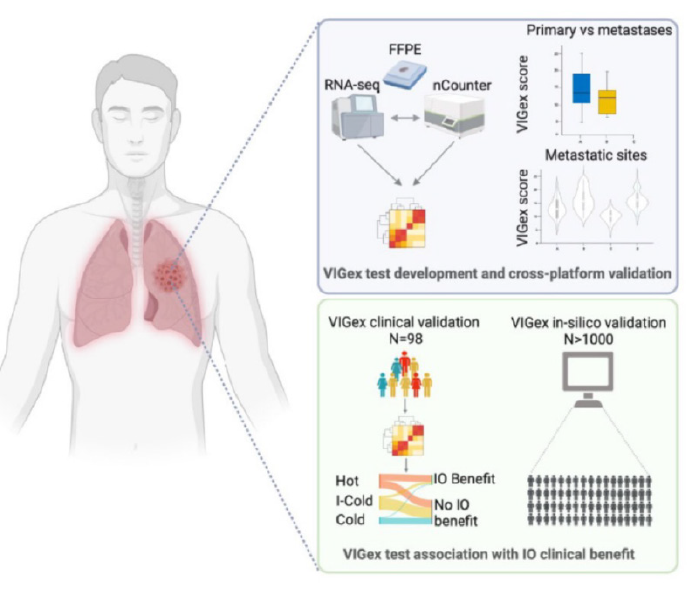
Our research activities focus on the development of novel multiplexed tests that are optimized to FFPE-derived nucleic acids and liquid biopsy. Once developed, these assays are validated and used in both clinical and translational research. We are also involved in several translational research projects. These include the identification of mechanisms of resistance to targeted therapies as well as predictive biomarkers of response to immunotherapy. Based on genome-wide RNA seq and array-based Nanostring technologies, we have developed the VIGex predictive pan cancer platform to help guide patient selection for personalized immune-based therapies (see Figure).
- Develop and implement large-scale pan-cancer panels to optimize strategies for routine patient prescreening.
- Pioneer the development of cutting-edge tests for comprehensive liquid biopsy analysis.
- Provide cutting-edge applications in cancer genomics by implementing novel technologies and developing new protocols.
- Prioritize translational research projects and promote team science to further strengthen VHIO's renowned excellence in oncology.
- VHIO is a founding partner of the Cancer Core Europe (CCE), along with the Gustave Roussy Cancer Campus Grand Paris (Villejuif, France), Cambridge Cancer Centre (Cambridge, UK), Karolinska Institute (Stockholm, Sweden), Netherlands Cancer Institute – NKI (Amsterdam, The Netherlands), National Center for Tumor Diseases–DKFZ- NCT (Heidelberg, Germany), and the National Cancer Institute of Milan (INT). Our group serves as co-leader of CCE’s Genomics Task Force and is responsible for aligning genomic testing across all member institutions.
- We have implemented and validated our new custom RNA sequencing panel (VHIO Epsilon ɛ00) for gene fusion detection and gene expression profiling analysis, including our VIGex pan-cancer immune gene expression signature for immunotherapy.
- Thanks to our institutional Advanced Molecular Diagnostics Program - DIAMAV (supported by the FERO Foundation), VHIO has become a reference center in Europe in molecular prescreening. In 2024, we performed molecular profiling of 2,128 patients, representing a significant increase compared to the last 10 years, when the number of patients profiled per year averaged 1,100. These patients are candidates for enrolment in early phase clinical trials conducted at our Research Unit for Molecular Therapy of Cancer (UITM) – CaixaResearch. Based on the molecular characteristics and therapeutic vulnerabilities of each person’s tumor, this program enables us to match an increasing number of patients to a particular clinical study.
- Implement improved strategies for routine patient prescreening with a large pan-cancer panel.
- Continue to provide cutting-edge applications in cancer genomics using novel technologies and protocol development.
- Prioritize translational projects and partnerships that reinforce VHIO's renowned excellence in oncology.
- González-Medina A, Vila-Casadesús M, Gomez-Rey M, Fabregat-Franco C, Sierra A, Tian TV, Castet F, Castillo G, Matito J, Martinez P, Miquel JM, Nuciforo P, Pérez-López R, Macarulla T, Vivancos A. Clinical Value of Liquid Biopsy in Patients with FGFR2 Fusion-Positive Cholangiocarcinoma During Targeted Therapy. Clin Cancer Res. 2024 Oct 1;30(19):4491-4504.
- Ros J, Vivancos A, Tabernero J, Élez E. Circulating tumor DNA, and clinical features to guide rechallenge with BRAF inhibitors in BRAF-V600E mutated metastatic colorectal cancer. Ann Oncol. 2024 Feb;35(2):240-241.
- Brasó-Maristany F, Ferrero-Cafiero JM, Falato C, Martínez-Sáez O, Cejalvo JM, Margelí M, Tolosa P, Salvador-Bofill FJ, Cruz J, González-Farré B, Sanfeliu E, Òdena A, Serra V, Pardo F, Luna Barrera AM, Arumi M, Guerra JA, Villacampa G, Sánchez-Bayona R, Ciruelos E, Espinosa-Bravo M, Izarzugaza Y, Galván P, Matito J, Pernas S, Vidal M, Santhanagopal A, Sellami D, Esker S, Fan PD, Suto F, Vivancos A, Pascual T, Prat A, Oliveira M. Patritumab deruxtecan in HER2-negative breast cancer: part B results of the window-of-opportunity SOLTI-1805 TOT-HER3 trial and biological determinants of early response. Nat Commun. 2024 Jul 11;15(1):5826.
- Hernando-Calvo A, Yang SYC, Vila-Casadesús M, Han M, Liu ZA, Berman AHK, Spreafico A, Razak AA, Lheureux S, Hansen AR, Lo Giacco D, Abbas-Aghababazadeh F, Matito J, Haibe-Kains B, Pugh TJ, Bratman SV, Aleshin A, Berche R, Saavedra O, Garralda E, Elston S, Siu LL, Ohashi PS, Vivancos A, Bedard PL. Combined Transcriptome and Circulating Tumor DNA Longitudinal Biomarker Analysis Associates With Clinical Outcomes in Advanced Solid Tumors Treated With Pembrolizumab. JCO Precis Oncol. 2024 Aug;8:e2400100.
- Project title: CGI-Clinics. Data-Driven Cancer Genome Interpretation for Personalized Cancer Treatment.
Funding: HORIZON-HLTH-2021-CARE-05-02. HORIZON-RIA 101057509.
Award period: 01/11/2022 – 31/10/2027.
Principal Investigator: Ana Vivancos. - Project title: Factores de liberación y eliminación de ADN circulante libre en sangre.
Funding: Instituto de Salud Carlos III (ISCIII). Reference: PI24/00177.
Award period: 01/01/2025 – 31/12/2028.
Principal Investigator: Ana Vivancos.
- A 14-gene B-cell immune signature in early-stage triple-negative breast cancer (TNBC): a pooled analysis of seven studies. Conte B, Brasó-Maristany F, Hernández AR, Pascual T, Villacampa G, Schettini F, Vidal Losada MJ, Seguí E, Angelats L, Garcia-Fructuoso I, Gómez-Bravo R, Lorman-Carbó N, Paré L, Marín-Aguilera M, Martínez-Sáez O, Adamo B, Sanfeliu E, Fratini B, Falato C, Chic N, Vivancos A, Villagrasa P, Staaf J, Parker JS, Perou CM, Prat A. EBioMedicine. 2024 Apr;102:105043. doi: 10.1016/j.ebiom.2024.105043.
- Five latent factors underlie response to immunotherapy. Usset J, Rosendahl Huber A, Andrianova MA, Batlle E, Carles J, Cuppen E, Elez E, Felip E, Gómez-Rey M, Lo Giacco D, Martinez-Jimenez F, Muñoz-Couselo E, Siu LL, Tabernero J, Vivancos A, Muiños F, Gonzalez-Perez A, Lopez-Bigas N. Nat Genet. 2024 Oct;56(10):2112-2120. doi: 10.1038/s41588-024-01899-0.
- A Phase II, Open-Label, Randomized Trial of Durvalumab With Olaparib or Cediranib in Patients With Mismatch Repair-Proficient Colorectal or Pancreatic Cancer. Hernando-Calvo A, Han M, Ayodele O, Wang BX, Bruce JP, Abbas-Aghababazadeh F, Vila-Casadesús M, Sanz-Garcia E, Yang SYC, Berman HK, Vivancos A, Lam B, Lungu I, Salawu A, Stayner LA, Haibe-Kains B, Bedard PL, Avery L, Razak ARA, Pugh TJ, Spreafico A, Siu LL, Hansen AR. Clin Colorectal Cancer. 2024 Sep;23(3):272-284.e9. doi: 10.1016/j.clcc.2024.05.002.
- Patritumab deruxtecan in HER2-negative breast cancer: part B results of the window-of-opportunity SOLTI-1805 TOT-HER3 trial and biological determinants of early response. Brasó-Maristany F, Ferrero-Cafiero JM, Falato C, Martínez-Sáez O, Cejalvo JM, Margelí M, Tolosa P, Salvador-Bofill FJ, Cruz J, González-Farré B, Sanfeliu E, Òdena A, Serra V, Pardo F, Luna Barrera AM, Arumi M, Guerra JA, Villacampa G, Sánchez-Bayona R, Ciruelos E, Espinosa-Bravo M, Izarzugaza Y, Galván P, Matito J, Pernas S, Vidal M, Santhanagopal A, Sellami D, Esker S, Fan PD, Suto F, Vivancos A, Pascual T, Prat A, Oliveira M. Nat Commun. 2024 Jul 11;15(1):5826. doi: 10.1038/s41467-024-50056-y.
- Prognostic value of HER2DX in early-stage HER2-positive breast cancer: a comprehensive analysis of 757 patients in the Sweden Cancerome Analysis Network-Breast dataset (SCAN-B). Villacampa G, Pascual T, Brasó-Maristany F, Paré L, Martínez-Sáez O, Cortés J, Ciruelos E, Martin M, Conte P, Carey LA, Fernandez A, Harbeck N, Marín-Aguilera M, Vivancos A, Curigliano G, Villagrasa P, Parker JS, Perou CM, Prat A, Tolaney SM. ESMO Open. 2024 Mar;9(3):102388. doi: 10.1016/j.esmoop.2024.102388.
- Use of ctDNA in early breast cancer: analytical validity and clinical potential. Panet F, Papakonstantinou A, Borrell M, Vivancos J, Vivancos A, Oliveira M. NPJ Breast Cancer. 2024 Jun 19;10(1):50. doi: 10.1038/s41523-024-00653-3.
- Analytical validation of HER2DX genomic test for early-stage HER2-positive breast cancer. Marín-Aguilera M, Jares P, Sanfeliu E, Villacampa G, Hernández-Lllán E, Martínez-Puchol AI, Shankar S, González-Farré B, Waks AG, Brasó-Maristany F, Pardo F, Manning DK, Abery JA, Curaba J, Moon L, Gordon O, Galván P, Wachirakantapong P, Castillo O, Nee CM, Blasco P, Senevirathne TH, Sirenko V, Martínez-Sáez O, Aguirre A, Krop IE, Li Z, Spellman P, Metzger Filho O, Polyak K, Michaels P, Puig-Butillé JA, Vivancos A, Matito J, Buckingham W, Perou CM, Villagrasa-González P, Prat A, Parker JS, Paré L. ESMO Open. 2024 Mar;9(3):102903. doi: 10.1016/j.esmoop.2024.102903.
- Clinical Value of Liquid Biopsy in Patients with FGFR2 Fusion-Positive Cholangiocarcinoma During Targeted Therapy. González-Medina A, Vila-Casadesús M, Gomez-Rey M, Fabregat-Franco C, Sierra A, Tian TV, Castet F, Castillo G, Matito J, Martinez P, Miquel JM, Nuciforo P, Pérez-López R, Macarulla T, Vivancos A. Clin Cancer Res. 2024 Oct 1;30(19):4491-4504. doi: 10.1158/1078-0432.CCR-23-3780.
- Combined Transcriptome and Circulating Tumor DNA Longitudinal Biomarker Analysis Associates With Clinical Outcomes in Advanced Solid Tumors Treated With Pembrolizumab. Hernando-Calvo A, Yang SYC, Vila-Casadesús M, Han M, Liu ZA, Berman AHK, Spreafico A, Razak AA, Lheureux S, Hansen AR, Lo Giacco D, Abbas-Aghababazadeh F, Matito J, Haibe-Kains B, Pugh TJ, Bratman SV, Aleshin A, Berche R, Saavedra O, Garralda E, Elston S, Siu LL, Ohashi PS, Vivancos A, Bedard PL. JCO Precis Oncol. 2024 Aug;8:e2400100. doi: 10.1200/PO.24.00100.
- Post-surgery sequelae unrelated to disease progression and chemotherapy revealed in follow-up of patients with stage III colon cancer. Mirandola A, Kudriavtsev A, Cofre Muñoz CI, Navarro RC, Macagno M, Daoud S, Sanchez C, Pastor B, Pisareva E, Marin MS, Ruiz JG, Piris A, Rodriguez AG, Gonzalez NS, Vivancos A, Quarà V, Mellano A, Borghi F, Corti G, Marchiò C, Sapino A, Bartolini A, Crisafulli G, Bardelli A, Di Maio M, Lossaint G, Frayssinoux F, Crapez E, Ychou M, Soler RS, Fenocchio E, Fernandez Calotti PX, Mazard T, Vivas CS, Elez E, Di Nicolantonio F, Thierry AR. EBioMedicine. 2024 Oct;108:105352. doi: 10.1016/j.ebiom.2024.105352.
- Corrigendum to "Plasmatic BRAF-V600E allele fraction as a prognostic factor in metastatic colorectal cancer treated with BRAF combinatorial treatments": [Annals of Oncology 34 (2023) 543-552]. Ros J, Matito J, Villacampa G, Comas R, Garcia A, Martini G, Baraibar I, Saoudi N, Salvà F, Martin Á, Antista M, Toledo R, Martinelli E, Pietrantonio F, Boccaccino A, Cremolini C, Dienstmann R, Tabernero J, Vivancos A, Elez E. Ann Oncol. 2024 Oct;35(10):922. doi: 10.1016/j.annonc.2023.07.010.
- Circulating tumor DNA, and clinical features to guide rechallenge with BRAF inhibitors in BRAF-V600E mutated metastatic colorectal cancer. Ros J, Vivancos A, Tabernero J, Élez E. Ann Oncol. 2024 Feb;35(2):240-241. doi: 10.1016/j.annonc.2023.10.120.

Group Leader Paolo Nuciforo Attending Physicians Roberta Fasani, Siarhei Mauchanski, Artur Mezheyeuski, Sara Simonetti Laboratory Supervisor Jose Antonio Jiménez Research Support Technicians Carlos Bambaren, Laura Boleda, Mª Ángeles Diaz Postdoctoral Fellows Monica Aguilera, Francisca Gallego, Alba Santiago, Garazi Serna PhD Students Diego Alfonso Arregui, Stefania Napoli Graduate Student Leonardo Cardone Technicians Lidia Alonso, Julia Casals, Luis Garcia, Margarita Gonzalez, Xavier Guardia, Paola Martinez, Gertrudis Sánchez, Lidia Sánchez, César Javier Sevillano
Molecular Oncology Group
The Molecular Oncology Group at VHIO applies state-of-the-art tissue-based technologies in basic, translational, and clinical research to develop and validate novel tumor biomarkers for precision oncology.
In collaboration with VHIO’s Cancer Genomics Group led by Ana Vivancos, Oncology Data Science - ODysSey Group headed by Rodrigo Dienstmann, and the Research Unit for Molecular Therapy of Cancer (UITM) – CaixaResearch, directed by Elena Garralda, we co-lead VHIO's Molecular Prescreening Program, supported by the FERO Foundation. Each year, we perform molecular profiling for over 1,100 patients eligible for enrolment in early phase clinical trials at UITM-CaixaResearch.
Our group also serves as one of VHIO’s core technology platforms, and our laboratory contributes to VHIO’s research lines and programs. Our work includes biomarker analyses for patient stratification, digital pathology, tissue banking, and the development of primary patient-derived xenograft (PDX) models. In 2024, our contributions were reflected in multiple co-authored publications in high-impact journals.
As an independent group, we investigate the link between the gut microbiome and cancer. These investigations have led to important contributions in this field, such as the demonstration of Fusobacterium nucleatum and its associated microbiota in colorectal cancer (CRC) liver metastasis (Bullman et al, Science 2017) and the prognostic role of Fusobacterium persistence after neoadjuvant chemoradiotherapy (nCRT) in locally advanced rectal cancers (Serna et al, Ann Oncol 2020). Building on these findings, we co-lead WP3 of the OPTIMISTICC Cancer Grand Challenge project funded by Cancer Research UK (CRUK). Supported by the Mutua Madrileña Foundation and Instituto de Salud Carlos III (ISCIII), we also lead the FUSOMAP project to develop microbiota-based diagnostic and prognostic models for early-stage CRC.
As a core facility, we have supported over 400 clinical studies conducted at Vall d’Hebron Hospital, contributing to 70% of all ongoing trials at our Institute. Our involvement includes the coordination of sample collection, storage and shipment, developing and conducting 'real-time' assays to guide patient inclusion in these studies, and performing pharmacodynamic monitoring and dose-finding studies.
In 2024, we performed more than 3,500 molecular assays on samples for trial enrolment and over 20,000 tests to support basic and translation research. We also served as the central laboratory of choice for several international studies and successfully maintained our ISO15189 accreditation, ensuring continued excellence in quality and competence.
As a core facility:
- Apply molecular pathology strategies to support early clinical drug development.
- Define target epidemiology to help develop personalized treatment strategies in oncology.
- Serve as a central and local academic laboratory in clinical trials and a core technology platform at VHIO.
As an independent group:
- Advance insights into the cancer microbiome by interrogating cancer-associated microbiota to identify diagnostic, prognostic and/or predictive biomarkers in colorectal cancer and other tumor types.
- Develop novel methodologies to enhance biomarker quantification and reproducibility in cancer, with a focus on breast and colorectal cancers.
- Investigate the value of immune contexture analysis of the tumor microenvironment as a biomarker of response to immunotherapy in different cancer types.
- Explore the utility of artificial intelligence (AI) in pathology and precision oncology by developing multimodal approaches using H&E and IHC stained slides for reproducible and weekly supervised biomarker quantification and clinically relevant image patterns recognition.
- We co-lead VHIO's Molecular Prescreening Program (supported by the FERO Foundation). Each year, we perform molecular profiling in over 1,100 patients who are candidates for enrolment in early phase clinical trials conducted at our Research Unit for Molecular Therapy of Cancer (UITM) - CaixaResearch.
- We provided support for over 70% of all clinical studies conducted at VHIO.
- We performed more than 20,000 tests to support preclinical and translational research programs.
- We collected and analyzed samples from over 1,000 patients for translational microbiome research projects.
- Advance research on cancer microbiome by investigating its potential role as diagnostic, prognostic and/or predictive indicators in colorectal cancer and other tumor types.
- Apply spatial analyses to precision medicine in oncology.
- Explore the utility of artificial intelligence (AI) in digital pathology.
- Carmona J, Chavarria E, Donoghue K, von Gertten C, Oberrauch P, Pailler E, Scoazec G, Weijer R, Balmaña J, Brana I, Brunelli C, Delaloge S, Deloger M, Delpy P, Ernberg I, Fitzgerald RC, Garralda E, Lablans M, Lëhtio J, Lopez C, Fernández M, Miceli R, Nuciforo P, Perez-Lopez R, Provenzano E, Schmidt MK, Serrano C, Steeghs N, Tamborero D, Wirta V, Baird RD, Barker K, Barlesi F, Baumann M, Bergh J, de Braud F, Fizazi K, Fröhling S, Piris-Giménez A, Seamon K, Van der Heijden MS, Zwart W, Tabernero J. Cancer Core Europe: Leveraging Institutional Synergies to Advance Oncology Research and Care Globally. Cancer Discov. 2024 Jul 1;14(7):1147-1153.
- In 2024, our group has been awarded an AGAUR-Producte grant by the Programa Industria del Conoeixement (Generalitat de Catalunya-Agency for Management of University and Research Grants - AGAUR) for a project to develop a microbiome-based molecular test for cancer prognostication.
- FUSOMAP: Development of microbiota-based diagnostic and prognostic models by mapping intratumoral Fusobacterium and associated gut microbiota in early-stage colorectal cancer - Mutua Madrileña and ISCIII. 2020-2024.
- Opportunity: To Investigate the Microbiome’s Impact on Science and Treatment In Colorectal Cancer - OPTIMISTICC, Grand Challenge, Cancer Research UK. 2018-2025.
- Microbiota composition as risk predictor in cancer patients infected with severe acute respiratory syndrome coronavirus 2 (SARS-CoV-2) - La Marató TV3. 2021-2024.
- Development and validation of Fusobacterium and its associated microbiota as risk stratification biomarker for predicting outcome after standard of care treatment in locally advanced rectal cancer. Agència de Gestió dÁjuts Universitaris i de Recerca (AGAUR). 2024 – 2026.
- Herencia-Ropero A, Llop-Guevara A, Staniszewska AD, Domènech-Vivó J, García-Galea E, Moles-Fernández A, Pedretti F, Domènech H, Rodríguez O, Guzmán M, Arenas EJ, Verdaguer H, Calero-Nieto FJ, Talbot S, Tobalina L, Leo E, Lau A, Nuciforo P, Dienstmann R, Macarulla T, Arribas J, Díez O, Gutiérrez-Enríquez S, Forment JV, O'Connor MJ, Albertella M, Balmaña J, Serra V. The PARP1 selective inhibitor saruparib (AZD5305) elicits potent and durable antitumor activity in patient-derived BRCA1/2-associated cancer models. Genome Med. 2024 Aug 26;16(1):107. doi: 10.1186/s13073-024-01370-z.
- González-Medina A, Vila-Casadesús M, Gomez-Rey M, Fabregat-Franco C, Sierra A, Tian TV, Castet F, Castillo G, Matito J, Martinez P, Miquel JM, Nuciforo P, Pérez-López R, Macarulla T, Vivancos A. Clinical Value of Liquid Biopsy in Patients with FGFR2 Fusion-Positive Cholangiocarcinoma During Targeted Therapy. Clin Cancer Res. 2024 Oct 1;30(19):4491-4504. doi: 10.1158/1078-0432.CCR-23-3780.
- 3: Macarro C, Bernatowicz K, Garcia-Ruiz A, Serna G, Monreal-Agüero C, Simonetti S, Figini M, Corral JF, Garay V, Vidorreta M, García-Polo García P, Merino X, Mast R, Roson N, Vieito M, Escobar M, Alexander DC, Toledo R, Nuciforo P, Garralda E, Perez-Lopez R, Grussu F. Enhancing Tumor Microstructural Quantification With Machine Learning and Diffusion-Relaxation MRI. J Magn Reson Imaging. 2025 Feb;61(2):1018-1021. doi: 10.1002/jmri.29484. Epub 2024 Jun 19.
- Carmona J, Chavarria E, Donoghue K, von Gertten C, Oberrauch P, Pailler E, Scoazec G, Weijer R, Balmaña J, Brana I, Brunelli C, Delaloge S, Deloger M, Delpy P, Ernberg I, Fitzgerald RC, Garralda E, Lablans M, Lëhtio J, Lopez C, Fernández M, Miceli R, Nuciforo P, Perez-Lopez R, Provenzano E, Schmidt MK, Serrano C, Steeghs N, Tamborero D, Wirta V, Baird RD, Barker K, Barlesi F, Baumann M, Bergh J, de Braud F, Fizazi K, Fröhling S, Piris-Giménez A, Seamon K, Van der Heijden MS, Zwart W, Tabernero J. Cancer Core Europe: Leveraging Institutional Synergies to Advance Oncology Research and Care Globally. Cancer Discov. 2024 Jul 1;14(7):1147-1153. doi: 10.1158/2159-8290.CD-24-0377.
- Venken T, Miller IS, Arijs I, Thomas V, Barat A, Betge J, Zhan T, Gaiser T, Ebert MP, O'Farrell AC, Prehn J, Klinger R, O'Connor DP, Moulton B, Murphy V, Serna G, Nuciforo PG, McDermott R, Bird B, Leonard G, Grogan L, Horgan A, Schulte N, Moehler M, Lambrechts D, Byrne AT. Analysis of cell free DNA to predict outcome to bevacizumab therapy in colorectal cancer patients. NPJ Genom Med. 2024 May 29;9(1):33. doi: 10.1038/s41525-024-00415-x.
- Polack M, Smit MA, van Pelt GW, Roodvoets AGH, Meershoek-Klein Kranenbarg E, Putter H, Gelderblom H, Crobach ASLP, Terpstra V, Petrushevska G, Gašljević G, Kjær-Frifeldt S, de Cuba EMV, Bulkmans NWJ, Vink GR, Al Dieri R, Tollenaar RAEM, van Krieken JHJM, Mesker WE; UNITED Collaboration. Results from the UNITED study: a multicenter study validating the prognostic effect of the tumor-stroma ratio in colon cancer. ESMO Open. 2024 Apr;9(4):102988. doi: 10.1016/j.esmoop.2024.102988.
- Serra-Bardenys G, Blanco E, Escudero-Iriarte C, Serra-Camprubí Q, Querol J, Pascual-Reguant L, Morancho B, Escorihuela M, Tissera NS, Sabé A, Martín L, Segura-Bayona S, Verde G, Aiese Cigliano R, Millanes-Romero A, Jerónimo C, Cebrià-Costa JP, Nuciforo P, Simonetti S, Viaplana C, Dienstmann R, Oliveira M, Peg V, Stracker TH, Arribas J, Canals F, Villanueva J, Di Croce L, García de Herreros A, Tian TV, Peiró S. LOXL2-mediated chromatin compaction is required to maintain the oncogenic properties of triple-negative breast cancer cells. FEBS J. 2024 Jun;291(11):2423-2448. doi: 10.1111/febs.17112.
- Ligero M, Gielen B, Navarro V, Cresta Morgado P, Prior O, Dienstmann R, Nuciforo P, Trebeschi S, Beets-Tan R, Sala E, Garralda E, Perez-Lopez R. A whirl of radiomics-based biomarkers in cancer immunotherapy, why is large scale validation still lacking? NPJ Precis Oncol. 2024 Feb 21;8(1):42. doi: 10.1038/s41698-024-00534-9.
- Prior O, Macarro C, Navarro V, Monreal C, Ligero M, Garcia-Ruiz A, Serna G, Simonetti S, Braña I, Vieito M, Escobar M, Capdevila J, Byrne AT, Dienstmann R, Toledo R, Nuciforo P, Garralda E, Grussu F, Bernatowicz K, Perez-Lopez R. Identification of Precise 3D CT Radiomics for Habitat Computation by Machine Learning in Cancer. Radiol Artif Intell. 2024 Mar;6(2):e230118. doi: 10.1148/ryai.230118. Erratum in: Radiol Artif Intell. 2024 May;6(3):e249001. doi: 10.1148/ryai.249001.
- Ligero M, Serna G, El Nahhas OSM, Sansano I, Mauchanski S, Viaplana C, Calderaro J, Toledo RA, Dienstmann R, Vanguri RS, Sauter JL, Sanchez-Vega F, Shah SP, Ramón Y Cajal S, Garralda E, Nuciforo P, Perez-Lopez R, Kather JN. Weakly Supervised Deep Learning Predicts Immunotherapy Response in Solid Tumors Based on PD-L1 Expression. Cancer Res Commun. 2024 Jan 11;4(1):92-102. doi: 10.1158/2767-9764.CRC-23-0287. PMC10782919.
- Identification of New Patient Stratification Tools in Microsatellite Stable (MSS) RAS mt Metastatic Colorectal Cancer (mCRC) – COLOSSUS. ClinicalTrials.gov Identifier: NCT03699111.
- A Phase 1b Study to Evaluate the Safety, Pharmacokinetics, and Anti-Tumour Activity of the Myc Inhibitor OMO-103 Administered Intravenously in Patients with Advanced Solid Tumors (OMO-103-02). ClinicalTrials.gov Identifier: NCT06059001.
- Predicting olaparib sensitivity in patients with unresectable locally advanced/metastatic HER2-negative breast cancer with BRCA1, BRCA2, PALB2, RAD51C or RAD51D mutations or RAD51-foci low test: RADIOLA TRIAL. ClinicalTrials.gov Identifier: NCT05340413
- Pembrolizumab and Olaparib in Homologous-recombination Deficient (HRD) Advanced Colorectal Cancer (CRC). (PEMBROLA). ClinicalTrials.gov Identifier: NCT05201612
- Real World Clinical Practice Study to Assess the Feasibility and Impact of Liquid Biopsy-based Genomic Profiling on Treatment Decision Making for Patients with Metastatic Prostate Cancer in Spain (SOLTI-2102) (HOPE-PROSTATE). ClinicalTrials.gov Identifier: NCT05885009.
- Olaparib and durvalumab (MEDI4736) in patients with metastatic pancreatic cancer and DNA Damage Repair genes alterations (TTD-20-04). ClinicalTrials.gov Identifier: NCT05659914
- Spanish Registry of Digestive Tumours RETUD (RETUD) A Descriptive, Multicentre, Observational Epidemiological Study on Digestive Tumours (TTD-20-01). ClinicalTrials.gov Identifier: NCT06711211.
- A Phase 1/2 Study of AMG 193 in Combination with IDE397 in Participants with Advanced Methylthioadenosine Phosphorylase (MTAP)-Null Solid Tumors. (AMG 20220127) ClinicalTrials.gov Identifier: NCT05975073
- Analyzing and Solving Exceptional Long-term Survivors in Solid Tumors with Poor Prognosis: A 3 Cohorts Case Control Matched Study (ROSALIND). ClinicalTrials.gov Identifier: NCT06160596
- Trial of Cabozantinib Plus Atezolizumab in Advanced and Progressive Neoplasms of the Endocrine System. (phase II study). The CABATEN Study (CABATEN) ClinicalTrials.gov Identifier: NCT04400474
- The Basket of Baskets: A Modular, Open-label, Phase II, Multicentre Study To Evaluate Targeted Agents in Molecularly Selected Populations With Advanced Solid Tumours (BOB). ClinicalTrials.gov Identifier: NCT03767075
- Non-Randomized, Open-Label, Prospective Phase II Trial to Better Characterize the Status of HRD Leading to a Benefit From Olaparib in Combination With Bevacizumab in Patients With Advanced FIGO Stage III-IV High Grade Serous or Endometrioid Ovarian, Fallopian Tube, or Peritoneal Cancer After Standard First-Line Treatment (STROBE) ClinicalTrials.gov Identifier: NCT06377267
- Bevacizumab plus encoRAfenib-cetuximab in BRAF-V600E mutated metastatic colorectal cancer, a phase II study with a safety lead-in cohort, the BRAVE trial. ClinicalTrials.gov Identifier: NCT06411600
- Trial: A Phase II Study of Durvalumab (MEDI4736) Plus Tremelimumab for the Treatment of Patients With Progressive, Refractory Advanced Thyroid Carcinoma – ES ClinicalTrials.gov Identifier: NCT03753919

Group Leader Francesc Canals Senior Researcher Josep Villanueva Post-Doctoral Fellows Joan Navarro, Mireia Pujals Graduate Students Paula Carrillo, Carla Mayans, José Ángel Robles Technicians Marina Corominas, Luna Martín
Proteomics Group
Our group serves as a Core Technology Platform. We provide state-of-the-art proteomic methodologies to VHIO investigators. We also implement advances in the field to provide the very latest approaches and technologies.
We apply proteomic and phosphoproteomic analysis to characterize patient-derived xenograft (PDX) models of colorectal cancer (CRC). PDXs provide an optimal platform for defining CRC’s molecular features at the proteomic level. Complementing genomic classification, we explore this characterization’s potential as a tumor subtyping tool.
We have established methodologies for MS-based drug monitoring in biological samples to study pharmacokinetics and bioavailability in mouse models. Additionally, we use proteomic techniques to analyze protein-protein and protein-drug interactions.
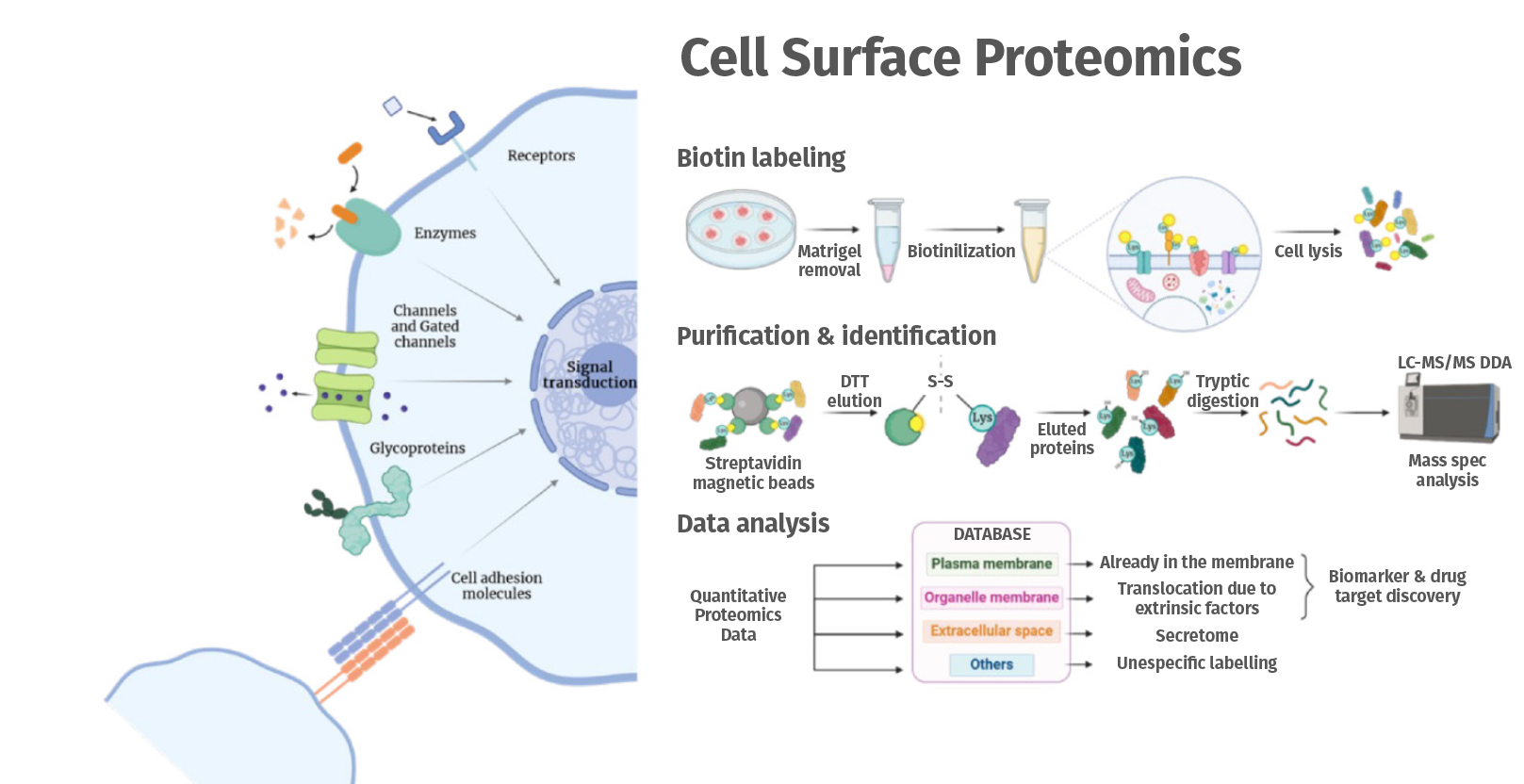
A key research focus is the quantitative proteomic profiling of sub-proteomes linked to cellular communication, including the secretome, exosomes, and cell surface proteome. Over the years, our work has shifted from data-driven cancer proteomics to hypothesis-driven interrogation of tumor cell protein communication.
We have demonstrated that an alternative extracellular function of the nuclear protein HMGA1 promotes tumor invasion and metastasis in triple-negative breast cancer (TNBC) by acting as a ligand for the Receptor for Advanced Glycation End-product (RAGE).
We are also involved in identifying predictive biomarkers of treatment response and resistance mechanisms in TNBC clinical studies.
- As a core facility, we provide services in proteomic techniques to other research groups.
- Conduct proteomic screenings aimed at identifying biomarkers for drug discovery and development.
- Development of mass spectrometry-based assays for the analysis of biomarkers in clinical samples.
- Characterize the role of Receptor for Advanced Glycation End-product (RAGE) in triple-negative breast cancer (TNBC) invasion and metastasis.
- Identification and characterization of protein factors associated with drug resistance in breast cancer.
- Development and implementation of proteomic methodologies aimed at advancing insights into cellular communication in cancer biology.
- Application of proteomic and phosphoproteomic screenings to the characterization of patient-derived xenograft (PDX) models of colorectal cancer (CRC).
- Setting up of mass spectrometry-based analytical methods for monitoring specific drugs in plasma and tumor tissue to assess preliminary pharmacokinetics in preclinical mouse models.
- Characterization of specific protein interactomes.
- Immunoprecipitation-mass spectrometry for the proteomic analysis of chromatin-associated protein complexes.
- Proteomic screening for novel biomarkers towards developing cancer therapeutics. Current projects are related to metalloprotease derived secreted proteins in breast cancer, and the proteomic and phosphoproteomic screening of CRC PDX models.
- Development of MS-based assays to monitor cancer biomarkers in clinical samples.
- Provide state-of-the art proteomic methodologies to other research groups.
- We plan to continue studying the role of RAGE in the tumorigenesis of triple-negative breast cancer (TNBC) and developing new RAGE antagonists as a novel therapeutic approach against TNBC.
- We will focus on developing cell surface proteomics and extracellular vesicles-based methodologies for translational oncology applications.
- Serra-Bardenys G, Blanco E, Escudero-Iriarte C, Serra-Camprubí Q, Querol J, Pascual-Reguant L, Morancho B, Escorihuela M, Tissera NS, Sabé A, Martín L, Segura-Bayona S, Verde G, Aiese Cigliano R, Millanes-Romero A, Jerónimo C, Cebrià-Costa JP, Nuciforo P, Simonetti S, Viaplana C, Dienstmann R, Oliveira M, Peg V, Stracker TH, Arribas J, Canals F, Villanueva J, Di Croce L, García de Herreros A, Tian TV, Peiró S. LOXL2-mediated chromatin compaction is required to maintain the oncogenic properties of triple-negative breast cancer cells. FEBS J. 2024 Jun;291(11):2423-2448.
- We are a member of CIBERONC’s Programa de Tumores del Tracto Digestivo, as part of the group (Program ID: CB16/12/00259) led by VHIO’s Director Josep Tabernero (PI: Teresa Macarulla).
- Project title: Nuevos conjugados anticuerpo-fármaco biespecíficos basados en her3 para el tratamiento de tumores sólidos agresivos.
Funding Agency: RETOS-MINECO.
Award period: 2023-2025.
PI: Josep Villanueva. - Project title: Targeting and Monitoring Non-genetic Cancer cell Plasticity in Triple-Negative Breast Cancer.
Funding Agency: MINECO.
Award period: 2024-2026.
PI: Josep Villanueva - Project title: Overcoming resistant tumors using CCR9-focused ADCs.
Funding Agency: RETOS-MINECO.
Award period: 2024-2026.
PI: Josep Villanueva.

Co-leadership Ana Vivancos, Head of Cancer Genomics, Elena Garralda, Director of the Research Unit for Molecular Therapy of Cancer (UITM) – CaixaResearch and Head of Early Clinical Drug Development, Paolo Nuciforo, Director of Core Transversal Groups and Units and Head of Molecular Oncology, Rodrigo Dienstmann, Head of Oncology Data Science (ODysSey) Program Coordination Susana Aguilar, Head of the VHIOTECA Unit Research Support Technicians Jenifer González, Laura González
Molecular Prescreening Program
VHIO's Molecular Prescreening Program, supported by FERO’s Institutional Advanced Diagnostics Program - DIAMAV, was established in 2010 as a strategic program for the detection of validated and emerging cancer biomarkers to help guide clinicians in selecting both standard-of-care and investigational anti-cancer treatments, and spur clinical-molecular correlative research at VHIO.
This program is co-led by VHIO’s Ana Vivancos, Paolo Nuciforo, Elena Garralda, and Rodrigo Dienstmann, Principal Investigators of our Cancer Genomics, Molecular Oncology, Early Clinical Drug Development, and Oncology Data Science – OdysSey Groups, respectively. Activities are coordinated by Susana Aguilar, Head of the VHIOTECA Unit, in collaboration with Research Support Technicians, Jenifer González and Laura González.
The main objective of molecular prescreening at VHIO is to facilitate the clinical implementation of emerging cancer biomarkers that help to optimize the selection of therapies for patients being considered for enrolment in clinical trials. Diagnostic tests are developed and validated in-house for the cost-effective and streamlined identification of tumor molecular alterations of major interest in drug development.
Tumor profiling includes a variety of genomic techniques including next-generation sequencing panels (NGS) for the detection of mutations, copy number variations, gene fusions and RNA expression signatures, as well as histopathological techniques such as immunohistochemistry (IHC) and in situ hybridization (ISH) for protein and gene expression profiling.
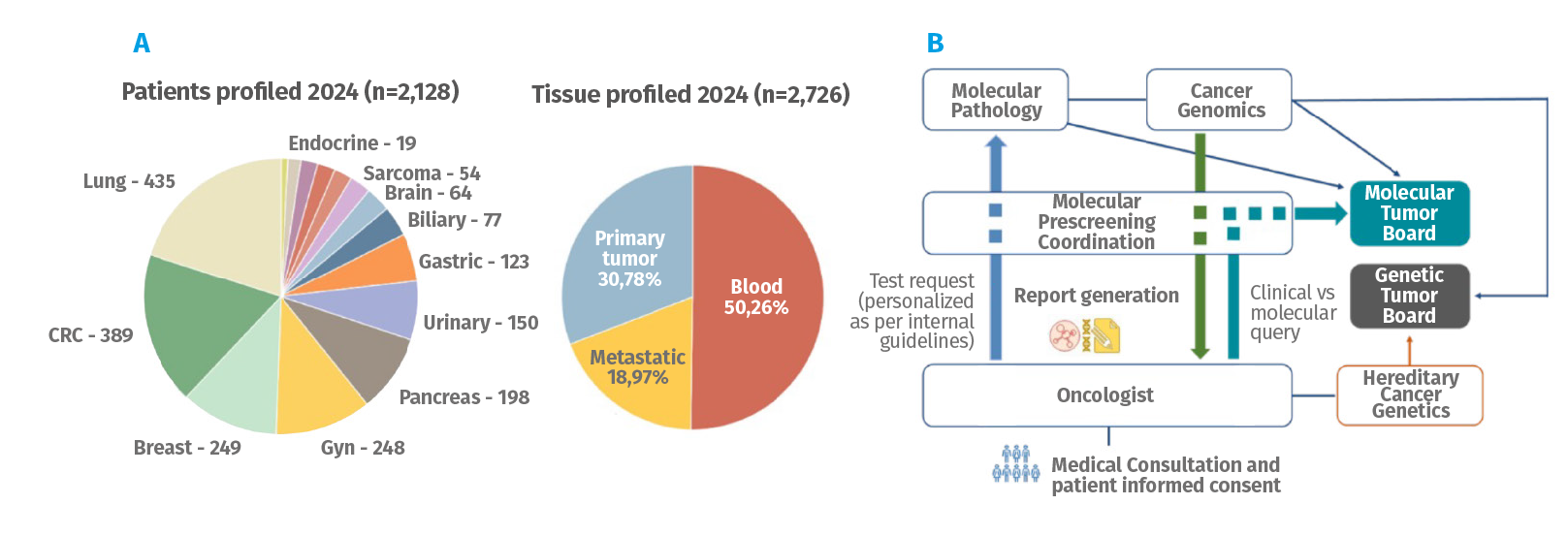
In 2024, we performed molecular profiling of 2,128 patients (Figure A), representing a significant increase compared to the last 10 years, when the number of patients profiled per year averaged 1,100. These patients are candidates for enrolment in clinical trials. Since 2022 the VHIO360 liquid biopsy test has been implemented, which was initially used for the detection of genomic alterations in 10% of cases. Over the past two years, this test has been applied to an increasing number of patients who may have acquired resistance to targeted therapies, or patients without metastatic tumor tissue biopsies, for testing. In 2024, we have been able to offer this test to more than 1,300 patients on a routine basis, representing 50% of all tumor tissue profiled (Figure A).
VHIO’s Cancer Genomics Group has also implemented a more precise technique to detect gene fusions, replacing the small Nanostring panel with an RNA-based enrichment panel for the detection of gene fusions and expression patterns in tumors (Epsilon Panel). This test was introduced at the end of 2023, and has since become the reference test based on RNA sequencing.
We also prioritize educating clinicians on the interpretation of next-generation sequencing tests and emerging biomarkers. During Molecular Tumor Board and Genetic Tumor Board meetings, we facilitate data exchange among a broad range of experts. To help guide treatment decision making and prevention strategies, we collectively review patients’ medical histories and the molecular profile of tumors (Figure B).
In 2024, we started to implement significant changes to data management and system notifications. To integrate test requests from the two laboratories (pathology and genomics), with results and notifications to clinicians, we use different data collection and query platforms (VHIOPAT, COGNOS and REDCap) that are integrated into a SQL database. This integration and automation of processes has been possible thanks to the work of the VHIO’s Data Science (ODysSey) Group and the recently established Data Engineering for Research Unit, led by Anna Pedrola.
We have also been working on the construction of a digital pathology biorepository of molecular prescreening images, with the aim of integrating imaging data with proteomics, transcriptomics and genomics data obtained from molecular prescreening tests.
- Clinical implementation of advanced molecular diagnostics to optimize the selection of therapies for patients being considered for enrolment in clinical trials.
- Continued medical education with standardized reports of genomic alterations and weekly Molecular Tumor Boards.
- Continued revision and update of molecular diagnostic tests to cover emerging cancer biomarkers for precision oncology.
- VHIO is an active member of the American Association for Cancer Research’s (AACR) Genomics Evidence Neoplasia Information Exchange (GENIE) project. This multi-phase, multi-year, international study catalyzes precision oncology through the development of a regulatory-grade registry, which aggregates and links clinical-grade cancer genomic data with clinical outcomes from tens of thousands of cancer patients treated at the participating institutions.
- We have increased molecular profiling by liquid biopsy to help patients who may have acquired resistance to targeted therapies, or patients without metastatic tumor tissue biopsies for testing. In 2024, we have implemented a new test to analyze a high number of gene fusion events, as well as a gene expression signature (VIGEX) that classifies solid tumors into three categories based on gene expression levels involved in the adaptive immune response. This has now been implemented on a routine basis.
- We have consolidated a monthly Molecular Tumor Board. We discuss the results of somatic next-generation sequencing (NGS) panels and other biomarkers within the clinicopathological context of patients, and provide updates on the latest results reported in the literature on the interpretation of alterations and their actionability for targeted therapies.
- We have implemented a new data management and system notifications integration and automation system to enhance efficiency, traceability and quality.
- Continued implementation and utilization of novel biomarkers based on gene expression panels and digital pathology, among others.
- Delivery of new integrative, enhanced molecular prescreening reports to help guide treatment decision-making and optimize the selection of therapies for patients being considered for enrolment in clinical trials.
- Closely monitor the impact of the recent implementation of the liquid biopsy and the ongoing development of genomic and transcriptomic signatures.
- Hernando-Calvo A, Yang SYC, Vila-Casadesús M, Han M, Liu ZA, Berman AHK, Spreafico A, Razak AA, Lheureux S, Hansen AR, Lo Giacco D, Abbas-Aghababazadeh F, Matito J, Haibe-Kains B, Pugh TJ, Bratman SV, Aleshin A, Berche R, Saavedra O, Garralda E, Elston S, Siu LL, Ohashi PS, Vivancos A, Bedard PL. Combined Transcriptome and Circulating Tumor DNA Longitudinal Biomarker Analysis Associates With Clinical Outcomes in Advanced Solid Tumors Treated With Pembrolizumab. JCO Precis Oncol. 2024 Aug;8:e2400100.
- González-Medina A, Vila-Casadesús M, Gomez-Rey M, Fabregat-Franco C, Sierra A, Tian TV, Castet F, Castillo G, Matito J, Martinez P, Miquel JM, Nuciforo P, Pérez-López R, Macarulla T, Vivancos A. Clinical Value of Liquid Biopsy in Patients with FGFR2 Fusion-Positive Cholangiocarcinoma During Targeted Therapy. Clin Cancer Res. 2024 Oct 1;30(19):4491-4504.
- Aguilar S, Vivancos A, Nuciforo P, Gonzalez J, Pedrola J, Viaplana C, Felip E, Tabernero J, Garralda E, Dienstmann R. Adapting a VHIO’s Prescreening Program to match molecular alterations in over 10,000 patient’s tumors with targeted agents and immunotherapies in early clinical trials. ASCO Meeting 2024. Abstract number Publication: e23071.

Unit Head Susana Aguilar Clinical Research Oncology Nurses Ana Baizán, Ana María Castiñeira, Ariadna García, Helena Palma, Verónica Rodríguez, Marta Sanz, Alex Sierra, Mireia Soleda, Anna Suñol Research Support Technicians Carlos Bambaren, Laura Boleda, Erika Sáez, Inés Suárez
VHIOTECA
Our VHIOTECA Unit supports researchers in obtaining, registering and preserving biosamples other than tumoral tissue, including plasma, feces and saliva. Donated by cancer patients, these samples are vital for cancer research.
The advent of liquid biopsy analysis for identifying novel biomarkers of response and resistance to cancer therapies—and its application in clinical research requiring plasma samples—has led to a significant increase in blood draws from cancer patients.
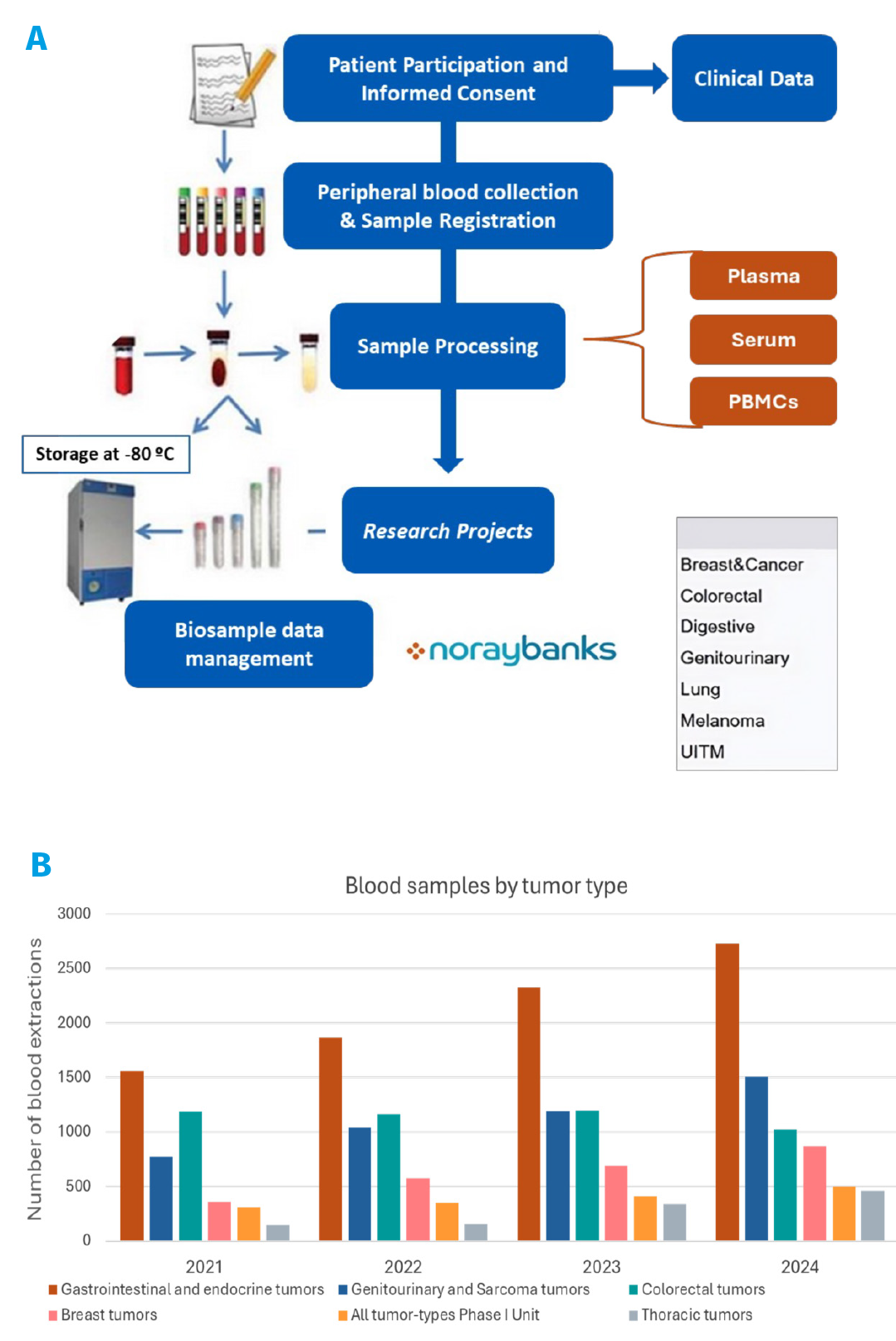
Blood-based liquid biopsy requires an optimal infrastructure, the dynamization of circuits and optimization of resources. We aim to consolidate existing circuits and processes to ensure the optimal use of samples in the best possible conditions (Figure A). We are also committed to supporting VHIO investigators in setting up new projects using blood plasma samples. In 2024, as a result of teamwork, we collected 7,000 blood samples from patients with different cancer types including upper gastrointestinal, genitourinary, colorectal, breast, and lung tumors. Initiated in 2015, the number of samples collected has significantly increased since our unit was established in 2021 (Figure B).
One area of growing interest in clinical oncology is the study of the microbiome in tumor development and progression, especially in colorectal cancer. These studies require the collection and molecular testing of stool samples, as well as the completion of patient questionnaires for subsequent epidemiological studies. We aim to set up a new circuit for sample and data collection to facilitate the development and execution of projects focused on the microbiome and cancer. This year, in collaboration with Paolo Nuciforo, Head of VHIO’s Molecular Oncology Group, we have continued to follow a sample and data collection circuit that we established in 2022. These processes also count on the expertise of our research support technicians who is exclusively dedicated to all related tasks. In 2024, we have collected processed 338 samples and 215 patients have completed questionnaires.
Our team comprises clinical and translational research oncology nurses specialized in different tumor types, and research support technicians for sample processing and registration, logistics and management as well as database maintenance.
Consolidation of existing circuits:
- Support researchers in the extraction, registration and storage of samples (mostly plasma), and database maintenance.
- Standardize protocols and establish Standard Operating Procedures (SOPs).
- Optimal registration and archiving of patient Informed Consent forms.
- Establish new circuits for the collection of different plasma and tumor samples (e.g. feces, saliva, breast milk, etc.), and patient and sample data that are tailored to the specific requirements of different research projects.
Research support:
- Collaborate with our clinical and preclinical teams to help set up new projects and foster collaboration using existing or new samples.
- We have increased the collection of different plasma and tumor samples in a standardized and secure manner, with patient and sample data tailored to the specific requirements of different clinical research projects.
- We manage the registration and storage of samples using NorayBanks software for the optimal and secure management and traceability of samples and all their associated data.
- We have implemented a Research Electronic Data Capture (REDCap) web application to centralize the registration and archiving of patient Informed Consent forms, and collaborate with our teams in using REDCap for specific research studies (eg. feces sample circuit).
- Continue to support VHIO’s clinical and preclinical teams in the collection of samples for research.
- Optimize the use of REDCap (Research Electronic Data Capture) secure web application for building and managing online surveys and VHIOTECA’s databases.
- Provide increased support for the storage of different plasma and tumor samples (e.g. feces, saliva, breast milk etc.)