





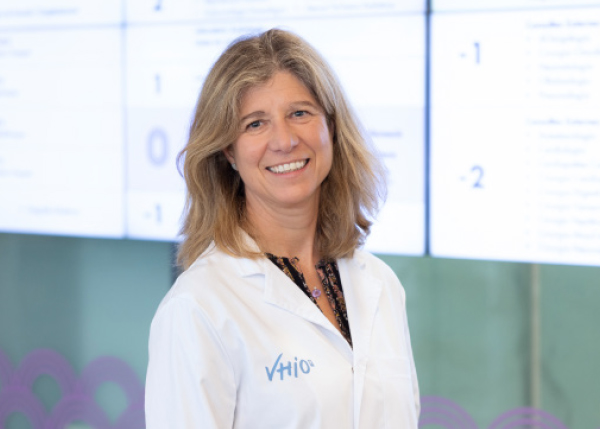


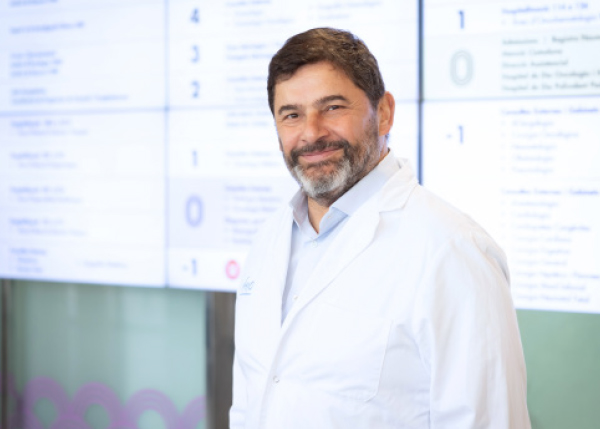














Under the inspiring leadership of Josep Tabernero, the Vall d’Hebron Institute of Oncology (VHIO) has established itself as a Comprehensive Cancer Center of excellence of international renown that continues to grow from strength to strength.
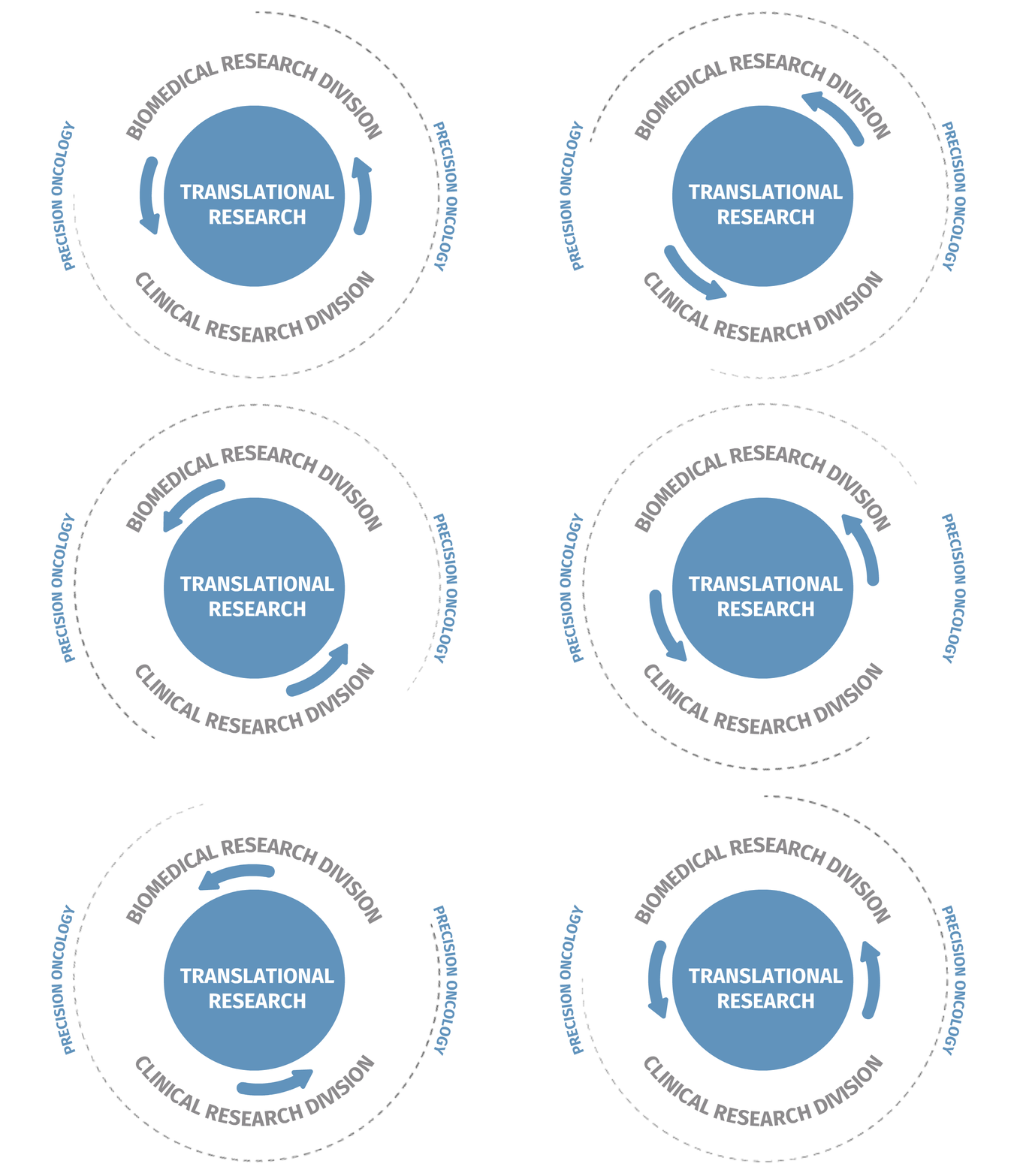
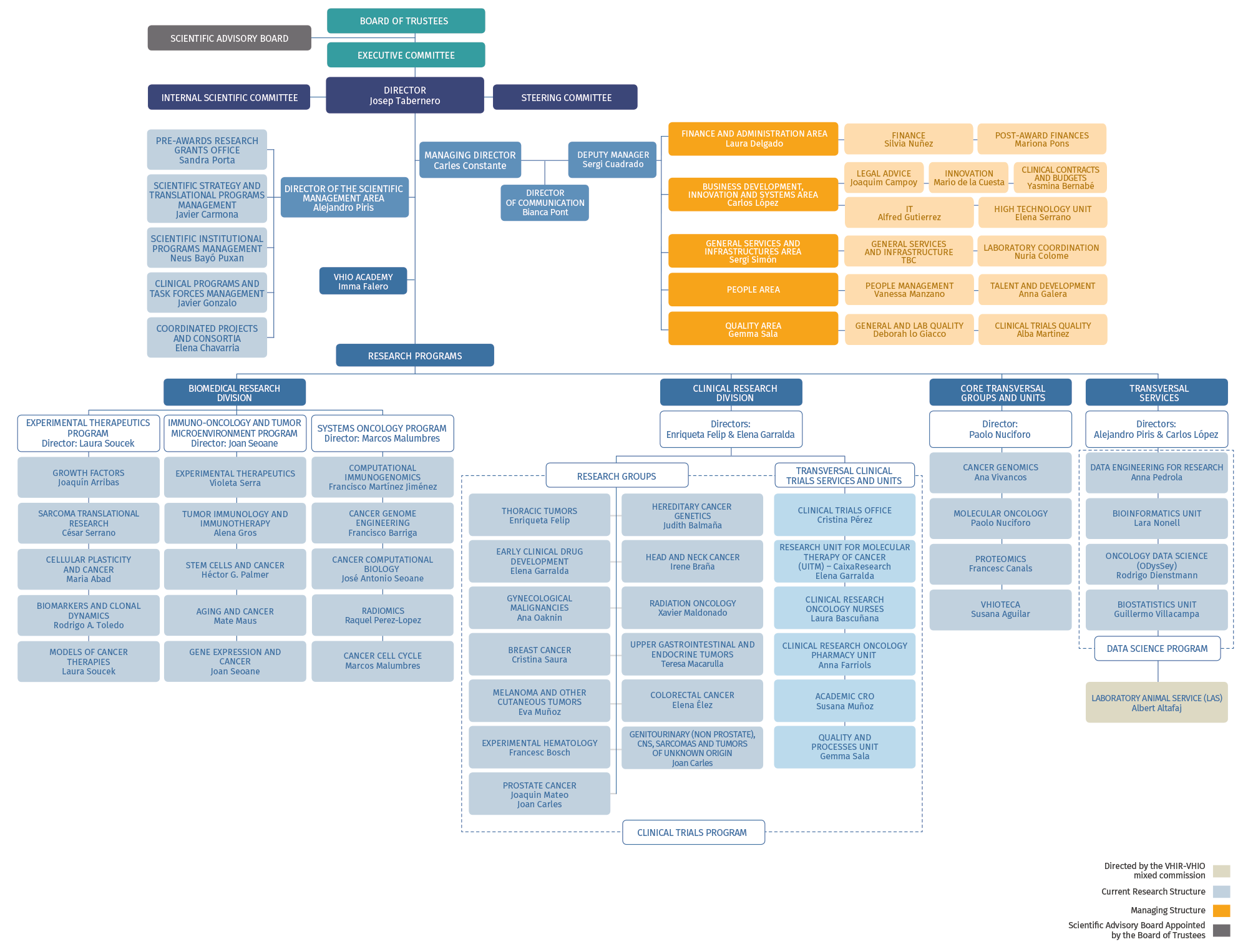
Supported by an optimal organizational structure, our multidisciplinary translational research model enables us to anticipate and address the many challenges posed by this complex disease. At VHIO, we seamlessly bridge preclinical and clinical research to accelerate cancer discovery from bench-to-bedside and back, a vision that was pioneered by our founding director, José Baselga.
As reflected in the theme of this year’s report, we have continued to strengthen our scientific infrastructure to optimize our future initiatives and partnerships—both nationally and internationally. Illustrating these efforts, we have re-organized our preclinical and translational research program under the umbrella of the Biomedical Research Division. This incorporates our Experimental Therapeutics, Immuno-Oncology and Tumor Microenvironment, and Systems Oncology programs that are directed by VHIO investigators and ICREA Research Professors Laura Soucek, Joan Seoane, and Marcos Malumbres, respectively.
Our Transversal Services are now co-directed by Alejandro Piris (Director of our Scientific Management Area) and Carlos López (Director of VHIO’s Business Development, Innovation and Systems Area). This program incorporates our Data Science Program, with the addition of two new teams: Biostatistics led by Guillermo Villacampa, and Data Engineering for Research headed by Anna Pedrola, both former investigators of VHIO’s Oncology Data Science (ODysSey) Group directed by Rodrigo Dienstmann.
In addition to Josep’s selection of research highlights presented in his foreword to this report, many other important developments have shaped our year. For example, we have continued to advance our cutting-edge technologies and platforms to remain at the forefront of promising applications and emerging approaches, including the detection of circulating tumor DNA (ctDNA) by liquid biopsy, single-cell sequencing, and the application of artificial intelligence (AI) and machine learning (ML) to deepen our understanding of the tumor microenvironment as well as predict cancer’s progression in individual patients.
In parallel with translational and clinical research, we continue to accelerate the development of gene and cell therapy products. Aimed at harnessing immune recognition to fight cancer, we have also contributed to advancing immune-based therapies, including Tumor-Infiltrating Lymphocytes and CAR T-cell therapies, as well as antibody drug conjugates (ADCs).
We are also making progress in planning a new VHIO building adjacent to our CELLEX Building. This expansion will support our continued growth and help us realize our vision for the future, as outlined in our strategic plan.
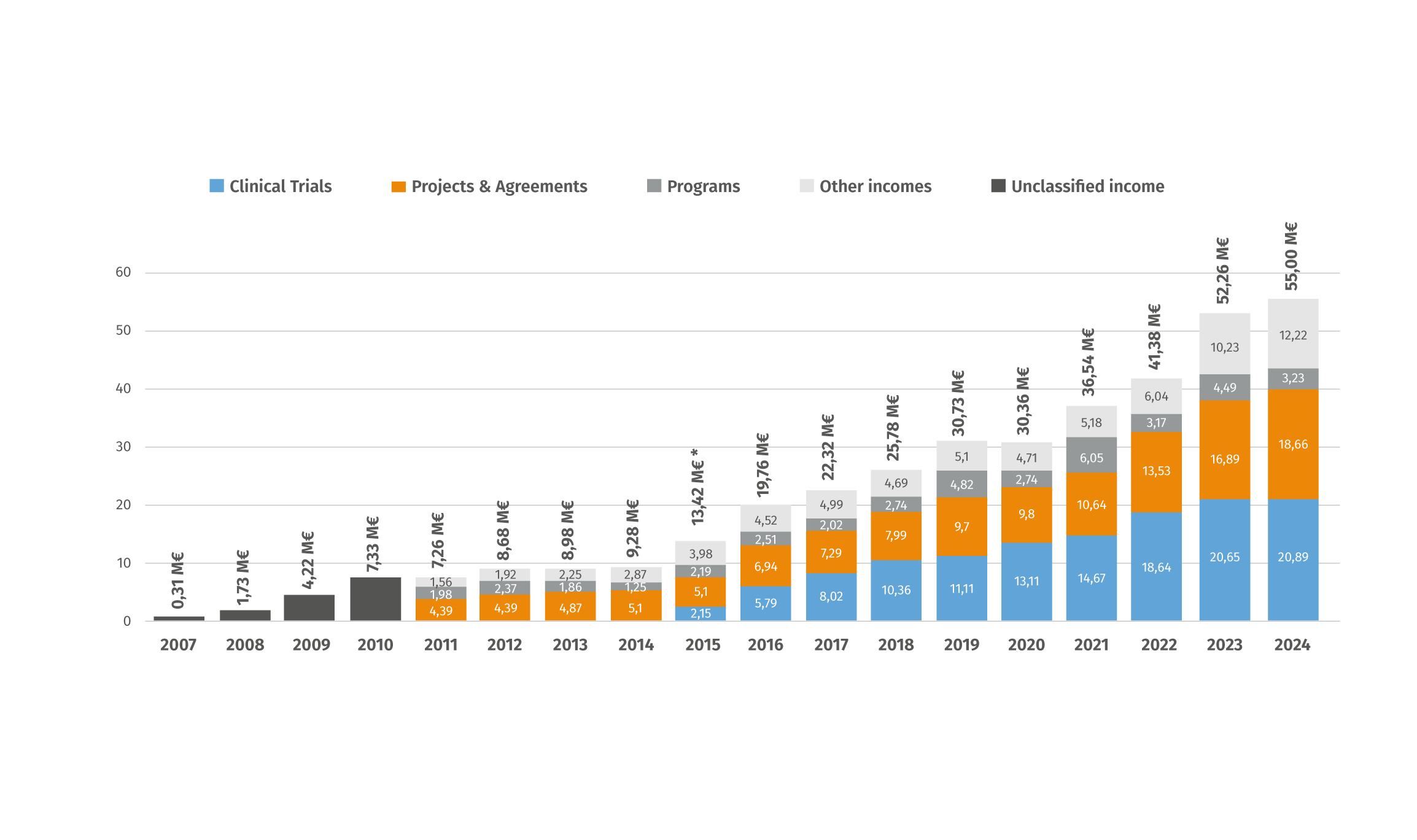
Our continued progress against cancer would not be possible without our institutional programs and the incredibly generous support we receive from public and private institutions, companies, and individual donors, all of whom share our commitment to reducing the burden cancer on society. As a direct reflection of the quality of our research, we also continue to secure additional funding through national and international competitive calls.
We are especially grateful to our wonderful Patrons and Institutional Supporters — Generalitat de Catalunya, Fundació Privada CELLEX, Fundación FERO, ”la Caixa” Foundation, Fundación BBVA and, more recently, Fundación CRIS contra el cáncer — for their devoted support and dedication.
A few of their many contributions include the following: